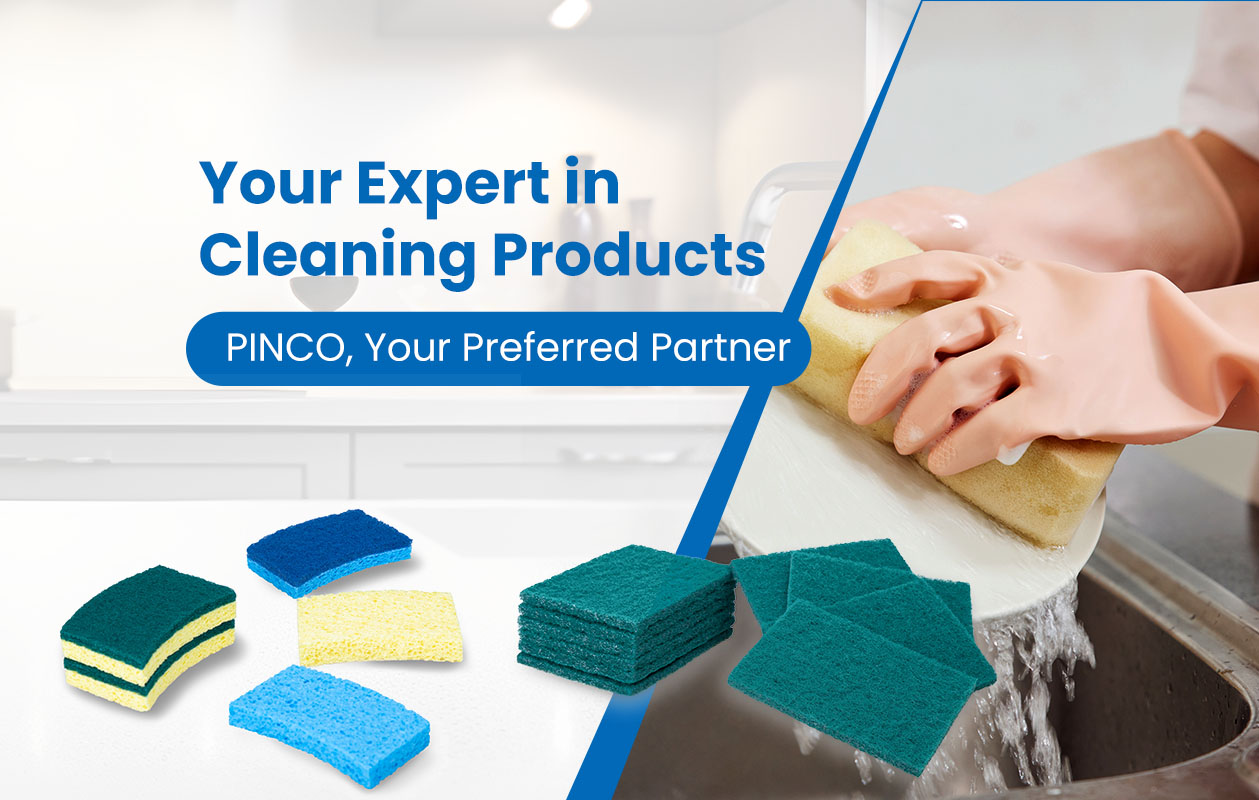
Kitchen Sponge is better for daily washing and surface care, while industrial scrubber is designed for heavy-duty cleaning tasks requiring stronger abrasion and durability.
The main difference between kitchen sponge and industrial scrubber is the cleaning intensity, material structure, and application environment.
Kitchen sponge is designed for everyday cleaning tasks such as washing dishes, wiping countertops, and removing food residue. It focuses on water absorption, detergent use, and surface-friendly cleaning.
Industrial scrubber is developed for demanding cleaning environments where stronger friction and longer service life are required. It is commonly used for equipment maintenance, industrial surfaces, and heavy contamination removal.
Both products are cleaning solutions, but their designs are optimized for different working conditions.
Cleaning environments create different challenges, which require different material performance.
kitchen cleaning usually involves:
Food residue
Oil stains
Light grease
Daily surface dirt
Industrial cleaning often involves:
Heavy grease
Rust residue
Machine contamination
Hardened buildup
High-frequency use
The correct scrubber material helps improve cleaning efficiency while preventing unnecessary surface damage.
Industrial scrubber provides stronger cleaning power because it is designed for high-friction applications.
Industrial scrubbers often use stronger materials such as:
Abrasive fibers
Durable synthetic materials
Heavy-duty mesh structures
They are suitable for removing:
Industrial grease
Tough deposits
Equipment residue
Stubborn surface buildup
Kitchen sponge provides effective cleaning for everyday tasks but may not withstand repeated heavy scrubbing.
| Comparison Factor | Kitchen Sponge | Industrial Scrubber |
|---|---|---|
| Main Application | Household and food cleaning | Industrial maintenance |
| Cleaning Intensity | Light to medium | Heavy-duty |
| Material Structure | Soft foam or sponge layer | Strong abrasive structure |
| Surface Protection | Higher | Depends on scrub type |
| Durability | Moderate | Higher for demanding tasks |
| Best Use | Daily washing | Professional cleaning |
Yes. Kitchen sponge is better for food-related cleaning because it is designed for frequent contact with kitchen surfaces.
Common applications include:
Dish washing
Countertop cleaning
Sink maintenance
Food preparation areas
Appliance cleaning
Kitchen sponges usually provide:
Good water absorption
Easy detergent application
Comfortable handling
Lower risk of damaging surfaces
For daily kitchen maintenance, a softer cleaning material is usually more suitable.
Industrial scrubber is better when cleaning requires higher strength and durability.
Typical applications include:
Manufacturing facilities
Commercial kitchens
Workshops
Warehouses
Equipment maintenance
Industrial environments often require cleaning tools that can handle repeated pressure and aggressive cleaning conditions.
Using a standard kitchen sponge in these situations may result in faster wear and reduced cleaning efficiency.
The better choice depends on the grease type and cleaning environment.
Kitchen sponge works well for:
Cooking oil residue
Food grease
Daily kitchen stains
when combined with suitable cleaning agents.
Industrial scrubber performs better for:
Heavy grease buildup
Machine oil residue
Industrial contamination
because its stronger structure creates more mechanical cleaning force.
Kitchen sponge is generally safer for delicate surfaces because it provides gentler cleaning action.
Suitable surfaces include:
Glassware
Ceramic items
Stainless steel cookware
Coated kitchen surfaces
Industrial scrubbers should be selected carefully because stronger abrasive materials may scratch softer surfaces.
Professional users choose scrubber grades according to surface hardness and cleaning requirements.
The better long-term value depends on the working environment.
Kitchen sponge provides better value for:
Daily household cleaning
Food service cleaning
Light maintenance tasks
Industrial scrubber provides better value for:
High-frequency cleaning
Heavy-duty applications
Professional facilities
Although industrial scrubbers may have higher initial costs, their durability can reduce replacement frequency in demanding environments.
Manufacturing quality directly affects cleaning performance and product lifespan.
Important factors include:
Material selection
Fiber density
Abrasive strength
Structural stability
Compression resistance
A professional cleaning product manufacturer selects suitable materials according to different industries and cleaning conditions.
For example, food-related applications may prioritize surface safety, while industrial applications may require maximum durability.
Yes. Both products can support OEM and private label cleaning solutions.
Manufacturers can customize:
Material structure
Size specifications
Abrasive level
Product shape
Packaging design
Brand labeling
Customized cleaning products allow distributors and brands to develop solutions for specific market requirements.
The right choice depends on cleaning intensity, surface type, and application environment.
Choose kitchen sponge for:
Daily kitchen cleaning
Food residue removal
Gentle surface care
Household applications
Choose industrial scrubber for:
Heavy-duty cleaning
Equipment maintenance
Commercial kitchens
Industrial environments
For everyday cleaning tasks, kitchen sponge provides better convenience and surface protection. For demanding applications, industrial scrubber delivers stronger performance and longer service life.