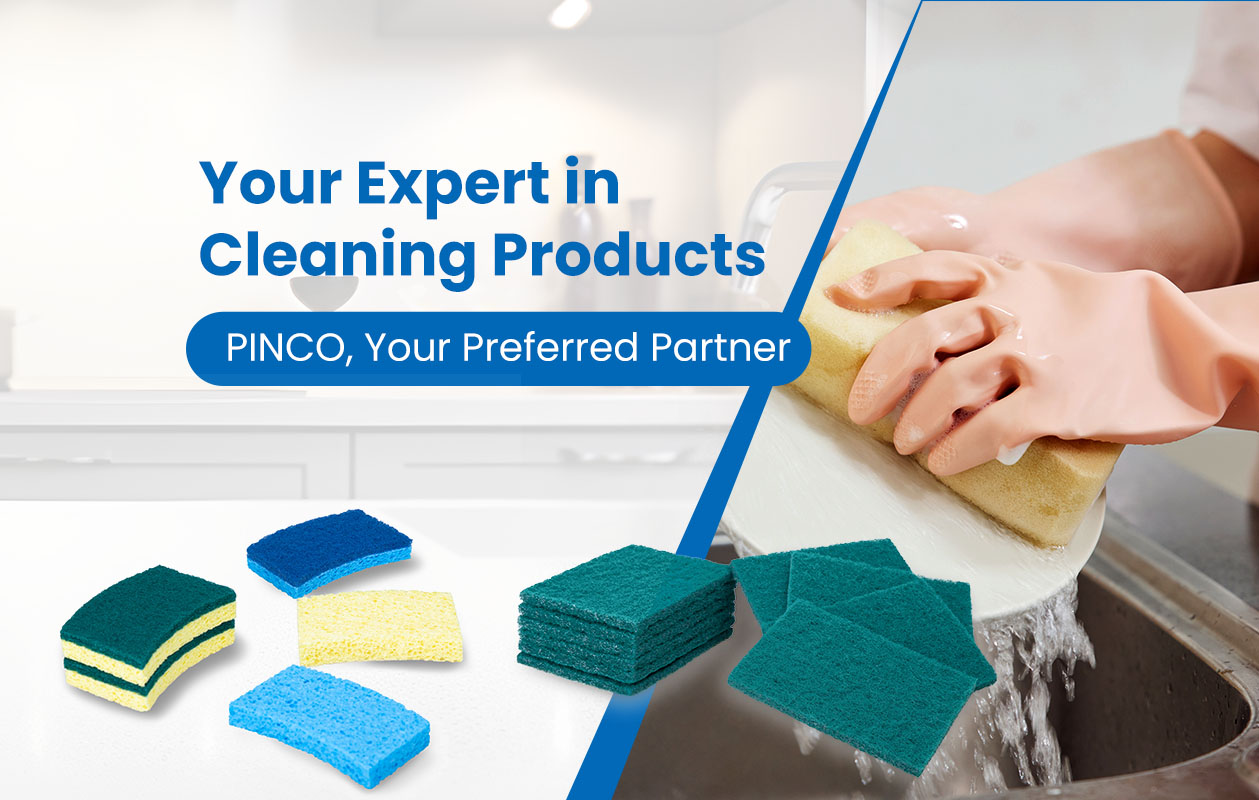
Choosing a suitable scourer requires more than comparing appearance or price. Different scourer products may vary significantly in material quality, production methods, durability, packaging, and supply stability.
Industrial cleaning environments require tools that can handle frequent use, heavy residue, and demanding working conditions. From food processing facilities to commercial kitchens and manufacturing areas, cleaning tasks often involve grease, oil, carbon deposits, and stubborn contamination that cannot be removed with ordinary cleaning materials.
Grill cleaning is one of the most demanding tasks in commercial kitchens, barbecue businesses, and food service environments. Grease buildup, burnt food particles, and carbonized residue can accumulate quickly after repeated cooking. A suitable steel scourer helps remove these difficult deposits through strong mechanical action and supports better equipment maintenance.
Metal scourers are widely used in commercial kitchens, food processing areas, restaurants, and household cleaning because they provide strong mechanical cleaning performance for removing stubborn residues.
Steel scourers are widely used in restaurant kitchens because they provide strong cleaning performance for cookware, grills, stainless steel equipment, and other surfaces exposed to heavy grease and food residues. Compared with ordinary cleaning tools, steel scourers are designed for more demanding cleaning tasks where durability and scrubbing strength are important.
Steel scourers are widely used in kitchen cleaning because of their strong scrubbing performance, durability, and ability to remove stubborn residues from cookware and kitchen surfaces. From household kitchens to commercial food service environments, stainless steel scourers provide an effective solution for cleaning tasks that require stronger abrasion than ordinary sponges.
MOQ for steel scourer bulk orders varies depending on material grade, wire thickness, product size, packaging type, and OEM customization requirements. In industrial cleaning product manufacturing, MOQ is not only a commercial threshold but also a reflection of production efficiency, tooling setup, and batch stability in large scale output systems.
Choosing an OEM steel scourer manufacturer requires careful evaluation of production capability, material consistency, quality control systems, and export compliance standards. In industrial cleaning product manufacturing, steel wire density, tensile strength, and corrosion resistance directly determine product durability under repeated friction cycles.
Cleaning products used in household, commercial, and industrial environments must comply with strict safety, material, and environmental standards. In global cleaning product trade, certification compliance is a key requirement for market access, especially in regions with strict chemical and consumer safety regulations.
Evaluating a metal scourer supplier requires analysis of material quality, manufacturing stability, production capacity, and compliance with international cleaning product standards.
The durability of scourers depends primarily on material selection, fiber density, abrasive structure, and bonding technology. In industrial cleaning product engineering, abrasion resistance and tensile strength are key indicators used to evaluate long term performance.
Industrial cleaning needs scourers with stronger durability, stable abrasive level, and reliable bulk supply. These products are used for equipment surfaces, workshop tools, metal parts, food processing areas, repair stations, and heavy-duty cleaning tasks where ordinary household sponges may wear out too quickly.