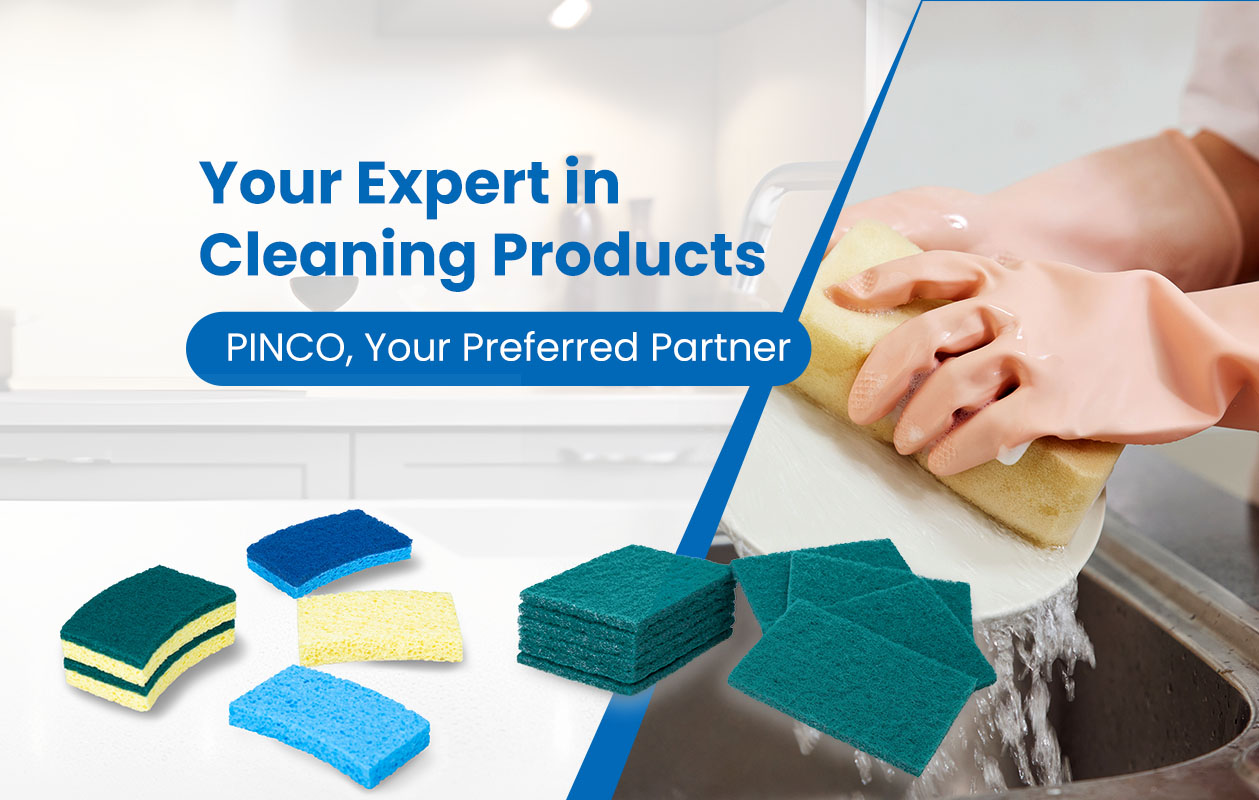
The durability of scourers depends primarily on material selection, fiber density, abrasive structure, and bonding technology. In industrial cleaning product engineering, abrasion resistance and tensile strength are key indicators used to evaluate long term performance. Laboratory testing standards for cleaning abrasives often measure wear resistance after repeated friction cycles, where high quality materials can withstand thousands of scrub cycles without structural breakdown.
Different materials offer different cleaning performance and lifespan. Stainless steel wire is widely used for heavy duty cleaning due to its high tensile strength and resistance to deformation. Nylon abrasive fibers provide flexibility and controlled scratching force, making them suitable for delicate surfaces. Polyester and nonwoven fibers are commonly used for general cleaning applications with balanced durability and softness.
Material engineering studies show that stainless steel fiber scourers can maintain structural integrity under high friction conditions up to 3 times longer than standard synthetic fiber alternatives.
Long lasting performance depends not only on raw material but also on density and bonding structure. Higher fiber density increases cleaning efficiency but also requires stronger bonding agents to prevent shedding during use.
Industrial testing standards for abrasive cleaning products often evaluate resistance under repeated compression and friction cycles. High quality bonded scourers can maintain over 80 percent structural integrity after extended use cycles in controlled laboratory conditions.
A structured production system ensures consistent durability. Typical manufacturing steps include:
Raw material fiber selection and grading
Abrasive particle mixing and bonding preparation
Heat pressing or adhesive lamination
Shaping and cutting into final structure
Drying and curing process
Packaging and quality inspection
Each stage affects final durability, especially bonding strength and fiber distribution uniformity in bulk supply production.
A manufacturer vs trader comparison is essential when evaluating long term performance. A manufacturer directly controls fiber selection, bonding process, density adjustment, and curing temperature. This ensures consistent durability across mass production batches.
A trader depends on external sourcing, which can result in variation in fiber quality, abrasive strength, and bonding consistency, leading to uneven product lifespan.
Key inspection stages include:
Tensile strength testing of bonded fibers
Abrasion resistance cycle testing
Density uniformity measurement
Water absorption performance evaluation
Structural integrity after repeated use cycles
Packaging compression resistance testing
These controls ensure export compliance and stable performance across global cleaning product supply chains.
| Material Type | Durability Level | Cleaning Strength | Surface Safety |
|---|---|---|---|
| Stainless steel fiber | Very high | Very high | Low |
| Nylon abrasive fiber | Medium | Medium | High |
| Polyester nonwoven fiber | Medium | Low to medium | Very high |
| Mixed composite fiber | High | High | Medium |
For international procurement, key sourcing factors include fiber material specification, abrasive particle type, bonding strength, density control, packaging durability, certification requirements, and usage environment. A structured OEM and ODM process includes material selection, sample testing, production validation, mass manufacturing, and final inspection.
PINCO Cleanwell operates a large scale production system focused on Scouring Pads, Sponge Scrubbers, steel scourers, and multi material cleaning solutions. Its integrated manufacturing capability ensures consistent fiber quality, controlled bonding strength, and stable performance across global OEM cleaning supply projects.