cleaning products used in household, commercial, and industrial environments must comply with strict safety, material, and environmental standards. In global cleaning product trade, certification compliance is a key requirement for market access, especially in regions with strict chemical and consumer safety regulations. International compliance frameworks such as ISO quality systems are widely used to ensure product consistency and safety across bulk supply chains.
One of the most important certifications for cleaning product manufacturing is ISO 9001, which defines quality management system requirements. It ensures that production processes are standardized, traceable, and continuously improved.
In large scale manufacturing environments, ISO certified systems have been shown to reduce production variability by more than 20 percent, improving batch consistency across cleaning materials such as scourers and Sponges.
Cleaning products that involve chemical treatment, dyes, or bonding agents must comply with chemical safety regulations. These standards ensure that materials used in production do not release harmful substances during use.
REACH compliance in European markets regulates chemical substance safety, while CPSIA standards apply to consumer safety requirements in North America. These frameworks ensure that cleaning products remain safe for household and commercial environments.
A certified cleaning product manufacturer operates under controlled production systems that integrate compliance into every stage. Typical manufacturing steps include:
Raw material verification and chemical testing
Fiber or foam processing and treatment
Abrasive or bonding integration
Molding, cutting, or shaping process
Drying and stabilization
Packaging under regulated conditions
Final inspection and certification verification
Each stage must align with export compliance requirements for international markets.
A manufacturer vs trader comparison is essential when evaluating certification reliability. A manufacturer directly controls raw material sourcing, production testing, chemical compliance, and documentation accuracy. This ensures that certification requirements are consistently met across production batches.
A trader depends on external factories, which may result in inconsistent certification coverage or incomplete compliance documentation, especially across different suppliers.
| Certification Type | Purpose | Application Area | Importance Level |
|---|---|---|---|
| ISO 9001 | Quality management system | All cleaning products | Very high |
| REACH | Chemical safety compliance | EU markets | Very high |
| CPSIA | Consumer product safety | US markets | High |
| ISO 14001 | Environmental management | Industrial production | Medium to high |
| BSCI | Social compliance audit | Global supply chain | High |
Certified manufacturing systems require strict inspection procedures:
Raw material chemical composition testing
Fiber or abrasive safety evaluation
Density and durability testing
Water absorption and performance validation
Packaging safety and transport simulation testing
Batch traceability documentation verification
These checkpoints ensure export readiness and compliance with global safety regulations.
For international procurement, sourcing decisions must include certification scope, raw material compliance, production traceability, packaging standards, chemical safety requirements, and audit readiness. A structured OEM and ODM process includes compliance review, sample testing, production validation, mass manufacturing, and final inspection with documentation support.
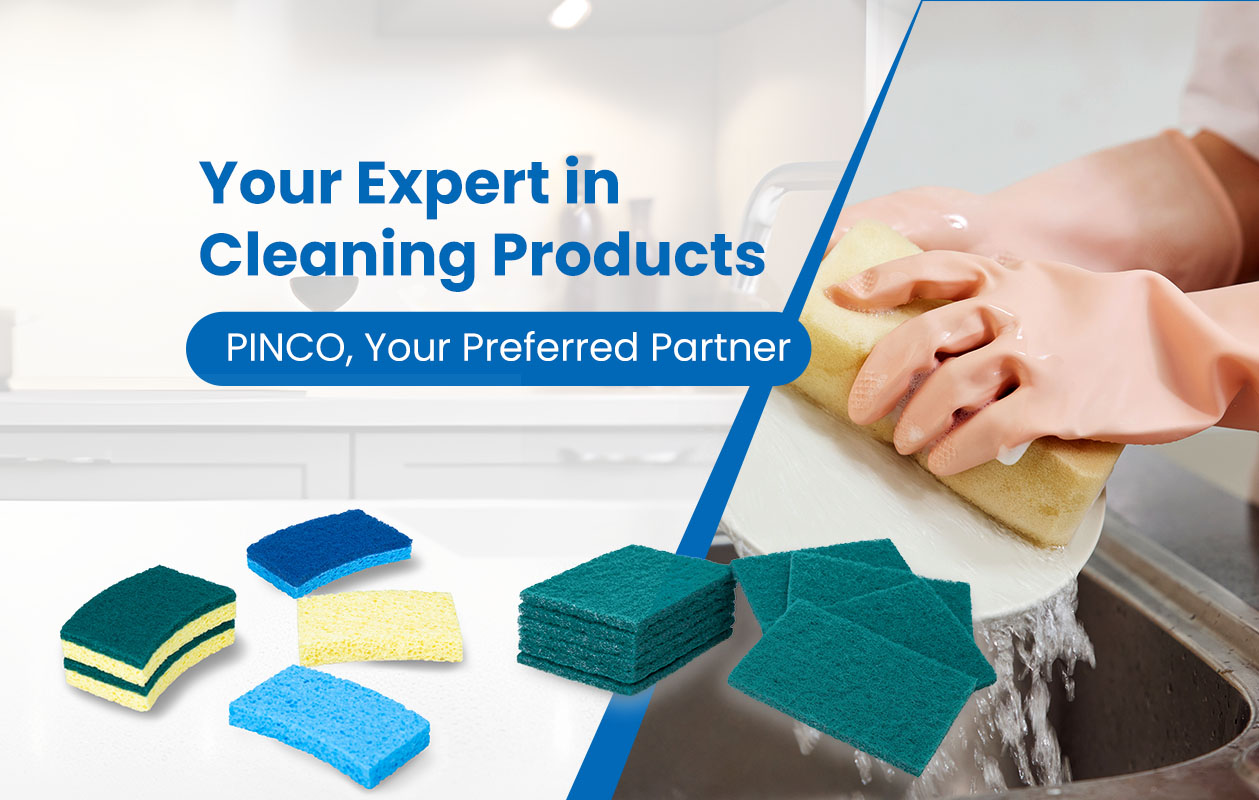
PINCO Cleanwell operates a large scale production system specializing in Scouring Pads, Sponge Scrubbers, steel scourers, and multi material cleaning solutions. Its integrated manufacturing process ensures full compliance control, stable quality systems, and consistent certification support across global bulk cleaning supply projects.