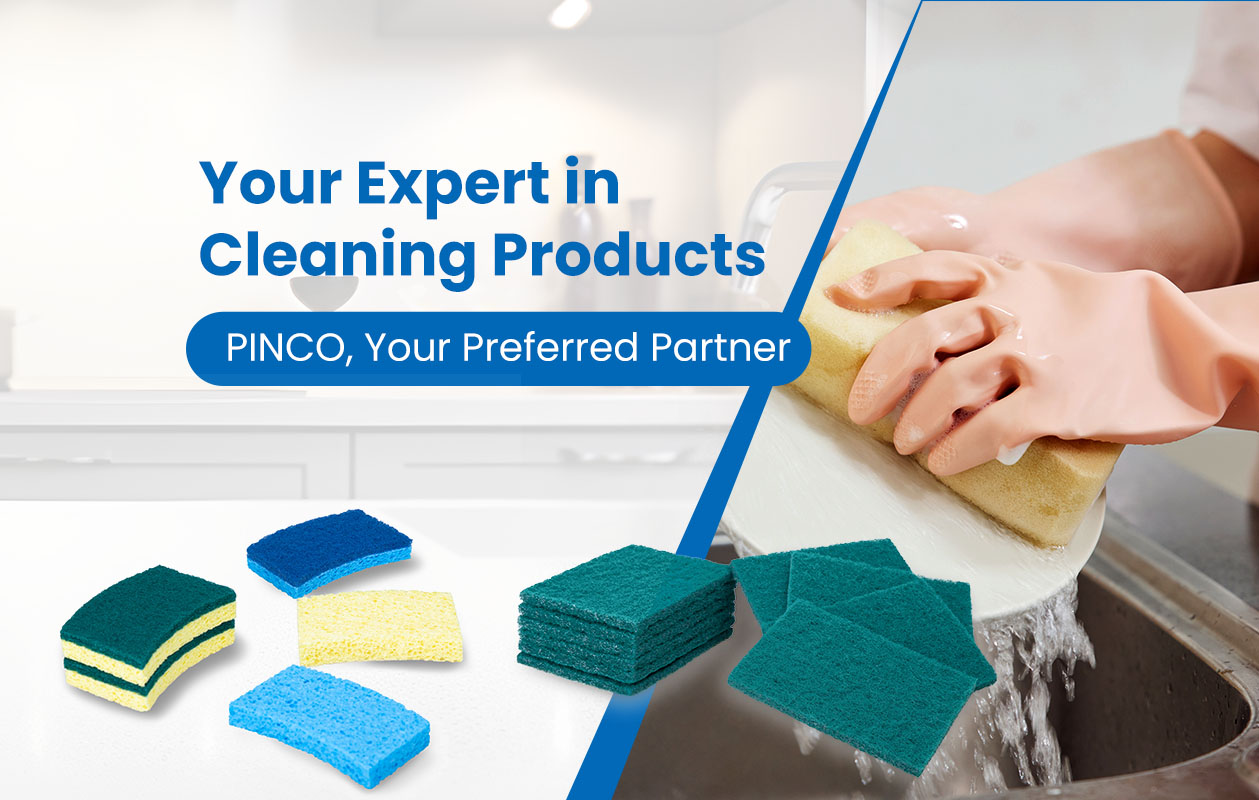
Double-sided scrub pad improves cleaning efficiency by providing more usable cleaning surfaces and longer working time, while single-sided scrub pad offers simpler operation and lower cost.
The main difference between double-sided scrub pad and single-sided scrub pad is the number of cleaning surfaces, usage flexibility, and product design.
Double-sided scrub pad features cleaning material on both sides, allowing users to switch surfaces during operation. This design increases usable area and can improve cleaning efficiency during continuous tasks.
Single-sided scrub pad has one active cleaning surface with a backing layer or support structure. It provides a simple and focused cleaning solution for standard applications.
Both designs are widely used, but the better choice depends on cleaning frequency, surface requirements, and operating conditions.
Scrub pad structure affects how long a product can maintain cleaning performance during use.
Important design factors include:
Available cleaning surface
Material durability
Ease of handling
Replacement frequency
Cleaning coverage
Double-sided scrub pads provide additional working surfaces, allowing users to continue cleaning after one side becomes loaded with dirt.
Single-sided scrub pads offer straightforward use but may require earlier replacement or adjustment during longer cleaning tasks.
Double-sided scrub pad generally provides better cleaning efficiency because both sides can be used during operation.
Advantages include:
Longer continuous cleaning time
Reduced replacement frequency
Better resource utilization
Increased working area
This makes double-sided scrub pads suitable for:
Commercial kitchens
Facility maintenance
Restaurant cleaning
Large-area surface care
Single-sided scrub pads remain effective for smaller cleaning tasks where only one active surface is required.
| Comparison Factor | Double-Sided Scrub Pad | Single-Sided Scrub Pad |
|---|---|---|
| Cleaning Surface | Two usable sides | One usable side |
| Working Time | Longer | Standard |
| Replacement Frequency | Lower | Higher |
| Operation | More flexible | Simple and direct |
| Cost Efficiency | Better for frequent use | Better for basic tasks |
| Best Application | commercial cleaning | General cleaning |
Yes. Double-sided scrub pad is often preferred for commercial cleaning because it supports longer working cycles.
Commercial environments require cleaning tools that can maintain productivity during:
Long cleaning sessions
High-frequency maintenance
Large surface cleaning
Repeated daily operations
Using both sides allows cleaning teams to reduce interruptions caused by changing pads frequently.
For professional cleaning companies, reducing tool replacement time can improve overall workflow efficiency.
Single-sided scrub pad is better when simplicity and cost control are the main priorities.
Suitable applications include:
Household cleaning
Small-area maintenance
Occasional cleaning
Basic surface scrubbing
Its simple structure provides:
Easy handling
Lower purchase cost
Straightforward replacement
For users who do not need extended cleaning performance, single-sided pads can provide sufficient results.
Double-sided scrub pad can provide better overall durability because the workload is distributed across two cleaning surfaces.
When one side becomes worn or dirty, the other side can continue providing cleaning performance.
However, durability also depends on:
Fiber material
Abrasive layer quality
Product thickness
Cleaning pressure
Usage environment
A high-quality single-sided scrub pad can also provide reliable performance when used in suitable applications.
Double-sided scrub pad can provide better cost efficiency for frequent cleaning operations.
Long-term benefits include:
Fewer replacements
Better material utilization
Reduced supply management
Longer usage cycles
Single-sided scrub pads may have lower initial costs but can require more frequent replacement in demanding environments.
For commercial buyers, the cost per cleaning cycle is often more important than the purchase price.
Yes. The material structure directly affects cleaning strength, durability, and surface compatibility.
Common materials include:
Synthetic fibers
Abrasive mesh materials
Nonwoven structures
Mixed fiber systems
Different material combinations determine:
Scrubbing strength
Wear resistance
Surface protection level
Suitable applications
Professional scrub pad manufacturers select materials according to cleaning requirements.
Yes. Both scrub pad types are suitable for OEM and private label cleaning product development.
Manufacturers can customize:
Pad size
Abrasive strength
Material structure
Color options
Packaging design
Brand labeling
Customized scrub pads allow cleaning brands to create solutions for different industries and market needs.
The right choice depends on cleaning frequency, application scale, and cost expectations.
Choose double-sided scrub pad for:
Commercial cleaning
Frequent use
Large cleaning tasks
Higher efficiency requirements
Choose single-sided scrub pad for:
Basic cleaning
Small areas
Cost-sensitive applications
Simple maintenance
For professional cleaning environments, double-sided scrub pad provides stronger efficiency advantages through extended usage and better resource utilization. Single-sided scrub pad remains a practical solution for standard cleaning tasks.