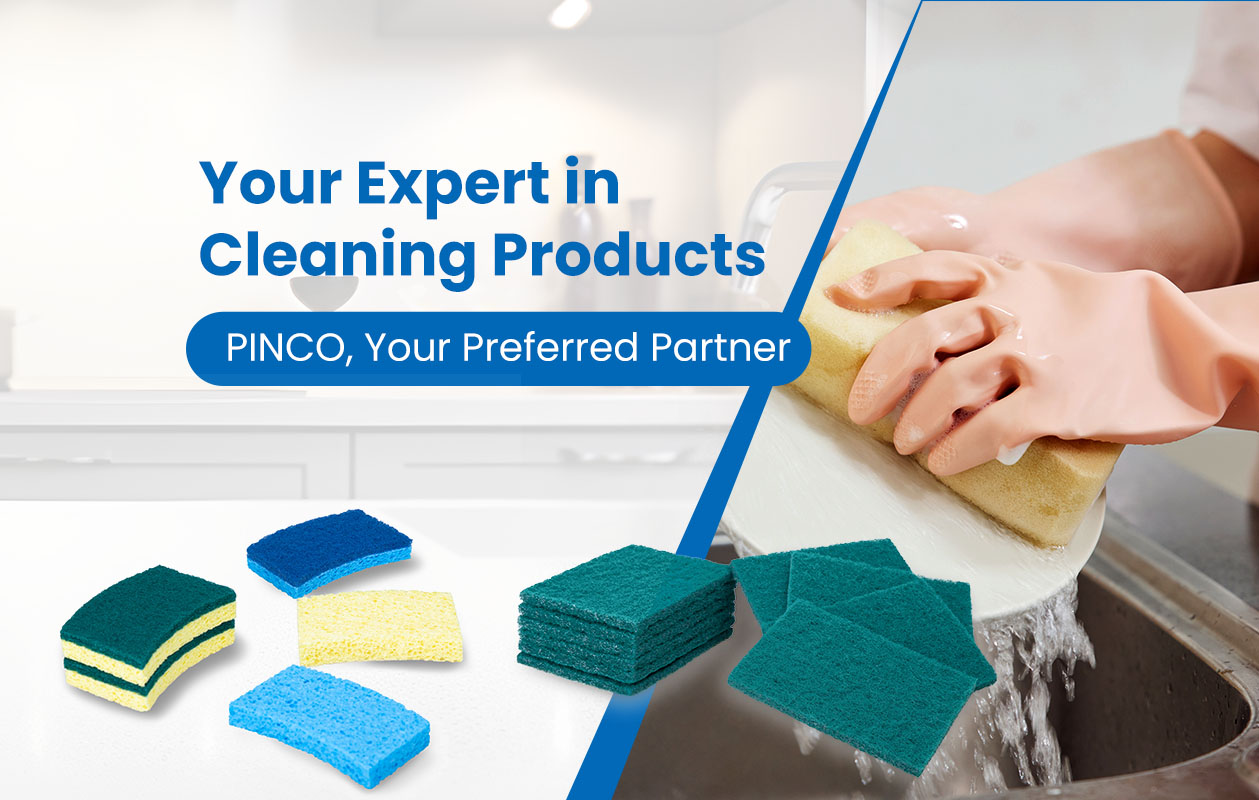
Microfiber cloth provides better overall cleaning results because it offers stronger dirt capture, lower lint performance, and wider application flexibility, while cleaning Sponge is better for liquid absorption and scrubbing tasks.
The main difference between cleaning sponge and microfiber cloth is the cleaning mechanism, material structure, and application purpose.
Cleaning sponge uses a porous structure to absorb water, cleaning solutions, and liquid residue. It is commonly used for washing, wiping, and removing visible dirt from surfaces.
Microfiber cloth uses ultra-fine synthetic fibers that create a dense cleaning surface. The fibers capture dust, oil, moisture, and small particles through mechanical trapping and absorption.
Both products are widely used in cleaning, but their performance differs depending on the type of dirt and surface being cleaned.
Cleaning material determines how effectively a product removes dirt while protecting the surface.
Microfiber cloth provides advantages through its fine fiber structure:
Captures small particles
Removes fingerprints and oil marks
Reduces lint residue
Cleans with less water
Cleaning sponge performs well because its porous structure can hold large amounts of liquid.
The choice between sponge and microfiber depends on whether the cleaning task requires absorption, scrubbing ability, or precision wiping.
Microfiber cloth provides better dust removal because its fibers attract and trap small particles instead of simply moving them across the surface.
It is commonly used for:
Furniture cleaning
Electronic devices
Glass surfaces
Automotive interiors
Office equipment
Microfiber can collect fine dust, hair, and small debris with high efficiency.
Cleaning sponge is less effective for dry dust because its main strength is liquid absorption rather than particle capture.
| Comparison Factor | Cleaning Sponge | Microfiber Cloth |
|---|---|---|
| Material Structure | Porous foam structure | Ultra-fine fiber structure |
| Liquid Absorption | Excellent | High and controlled |
| Dust Capture | Moderate | Excellent |
| Surface Protection | Depends on sponge type | Generally better |
| Lint Performance | May vary | Low lint |
| Best Application | Washing and liquid cleaning | Wiping and detailed cleaning |
Yes. Microfiber cloth is generally better for smooth surfaces because it provides gentle cleaning while effectively removing residue.
Suitable surfaces include:
Glass
Stainless steel
Screens
Polished surfaces
Automotive paint
The soft microfiber structure reduces friction and helps prevent scratches when used correctly.
Cleaning sponge may be suitable for durable surfaces but some rough sponge materials can create marks on sensitive finishes.
Cleaning sponge is better when strong water absorption or scrubbing ability is required.
Typical applications include:
Dish washing
Bathroom scrubbing
Large liquid spills
Heavy surface washing
The sponge structure can hold cleaning solution and release moisture during use.
For tasks involving large amounts of water or foam, sponge products remain highly practical.
Both products can remove grease, but they work differently.
Microfiber cloth is effective for removing:
Fingerprints
Light oil residue
Surface grease
Polishing marks
because the fibers capture oily particles.
Cleaning sponge is useful for heavier grease because it can work together with detergent and provide stronger scrubbing action.
For kitchen environments, the best choice depends on whether the task requires wiping or deeper cleaning.
Microfiber cloth is often preferred for commercial cleaning because it supports efficient maintenance across different surfaces.
Common applications include:
Hotels
Offices
Restaurants
Automotive detailing
Facility management
Advantages include:
Reusable performance
Low lint output
Multiple cleaning applications
Reduced chemical and water usage
Cleaning sponge remains useful for specific tasks such as kitchen and bathroom cleaning where liquid absorption is important.
Microfiber cloth usually provides better long-term value because high-quality microfiber products can be washed and reused many times.
Long-term advantages include:
Lower replacement frequency
Reduced cleaning supply costs
Multiple application uses
Better resource efficiency
Cleaning sponge may have lower initial costs but often requires more frequent replacement, especially in high-use environments.
Manufacturing quality directly affects cleaning product performance and lifespan.
For microfiber cloth, important factors include:
Fiber thickness
Fabric density
GSM weight
Edge finishing
Washing durability
For cleaning sponge, important factors include:
Material density
Absorption capacity
Compression resistance
Surface texture
A professional cleaning product manufacturer selects materials and production processes according to different application requirements.
Yes. Both cleaning sponge and microfiber cloth products can support OEM and private label development.
Manufacturers can customize:
Product size
Material specifications
Color options
Packaging design
Logo printing
Application-specific features
Customized cleaning products help brands meet different market requirements and customer expectations.
The correct choice depends on the cleaning task, surface type, and performance requirements.
Choose microfiber cloth for:
Dust removal
Glass cleaning
Surface polishing
Professional wiping
Multi-surface maintenance
Choose cleaning sponge for:
Liquid absorption
Heavy washing
Kitchen cleaning
Scrubbing applications
For professional cleaning results, microfiber cloth provides stronger overall versatility, while cleaning sponge remains an effective solution for tasks requiring high absorption and scrubbing power.