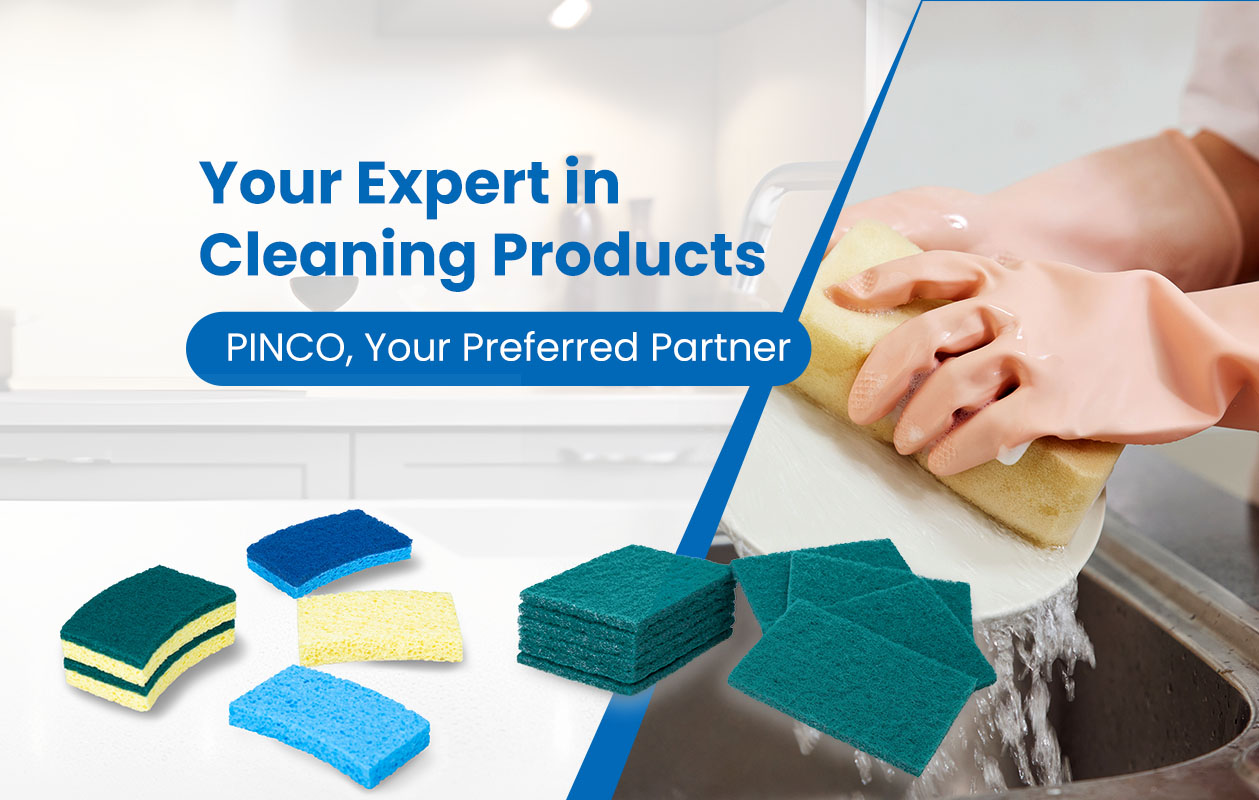
Private-label kitchen cleaning tools succeed when the OEM process is clear from the first sample to the final shipment. For buyers comparing supply options, the first checkpoint is whether the partner is a real manufacturer or only a trader. A factory can control materials, production settings, testing, packaging, and delivery in one system. PINCO identifies itself as a cleaning products manufacturer in Jiangmen with a 20,000 square meter factory, two main Scouring Pad production lines, and in-house teams for design, quality control, shipping, and R&D. Its factory can produce 16,000 square meters of scouring pads per day, which gives stronger support for stable private-label programs and repeat bulk supply.
The OEM process should begin with a full product brief. This includes target market, cleaning use, pad size, thickness, abrasive level, color coding, packaging style, carton marks, and compliance needs. A real manufacturer can review whether the requested specification matches the intended market and production method. PINCO also highlights OEM and ODM capability assessment points such as pad size and thickness adjustment, color options, private-label integration, customized packaging formats, and sample validation procedures.
A reliable manufacturing process overview should cover raw material selection, web forming, abrasive layer bonding, cutting, converting, packing, and batch release. Material standards used at this stage directly affect cleaning power, scratch control, density, and product life. PINCO states that its cleaning pads are produced through dedicated production lines with controlled use of foam substrates, nylon fibers, and abrasive scrub layers, which is important for custom kitchen cleaning tool development.
Sample approval is where a private-label program becomes practical. The supplier should confirm dimensions, color consistency, bonding strength, abrasive feel, absorbency, and packaging appearance before mass production starts. PINCO’s public quality materials note that unstable raw materials, uneven fiber density, weak bonding, and poor converting accuracy are common causes of bulk-order issues, so quality checkpoints should be built into each production stage rather than left to final inspection alone.
Bulk supply considerations should include lead time, daily capacity, in-line inspection, final sampling, carton accuracy, and shipment coordination. PINCO operates an inspection laboratory with abrasion testers, pressure testing equipment, electronic scales, and microscopes, supporting batch verification across larger volumes. That matters in kitchen cleaning tool private label programs because even small variation in thickness or abrasive distribution can affect the full shipment.
Export market compliance should be reviewed before production, especially when bonded materials and chemical inputs are involved. The European Commission states that REACH is the main EU chemicals law, entered into force in 2007, and shifts responsibility to industry for assessing and managing chemical risks and providing appropriate safety information. For OEM kitchen cleaning tools, this makes compliance review part of the sourcing checklist, not a final paperwork step.
| Item | What to confirm |
|---|---|
| Supplier type | Manufacturer, not trader |
| Product brief | Size, thickness, abrasive level, packaging |
| Materials | Foam, nylon fiber, abrasive layer, bonding |
| QC system | In-line checks, lab testing, final inspection |
| Bulk supply | Capacity, lead time, packing accuracy |
| Compliance | REACH-related material review |
For private-label kitchen cleaning tools, a good OEM partner should combine manufacturing control, sample responsiveness, inspection capacity, and shipping support in one operation. PINCO’s factory scale, dedicated scouring pad lines, testing capability, and structured OEM support make that process more efficient from concept approval to finished product release.