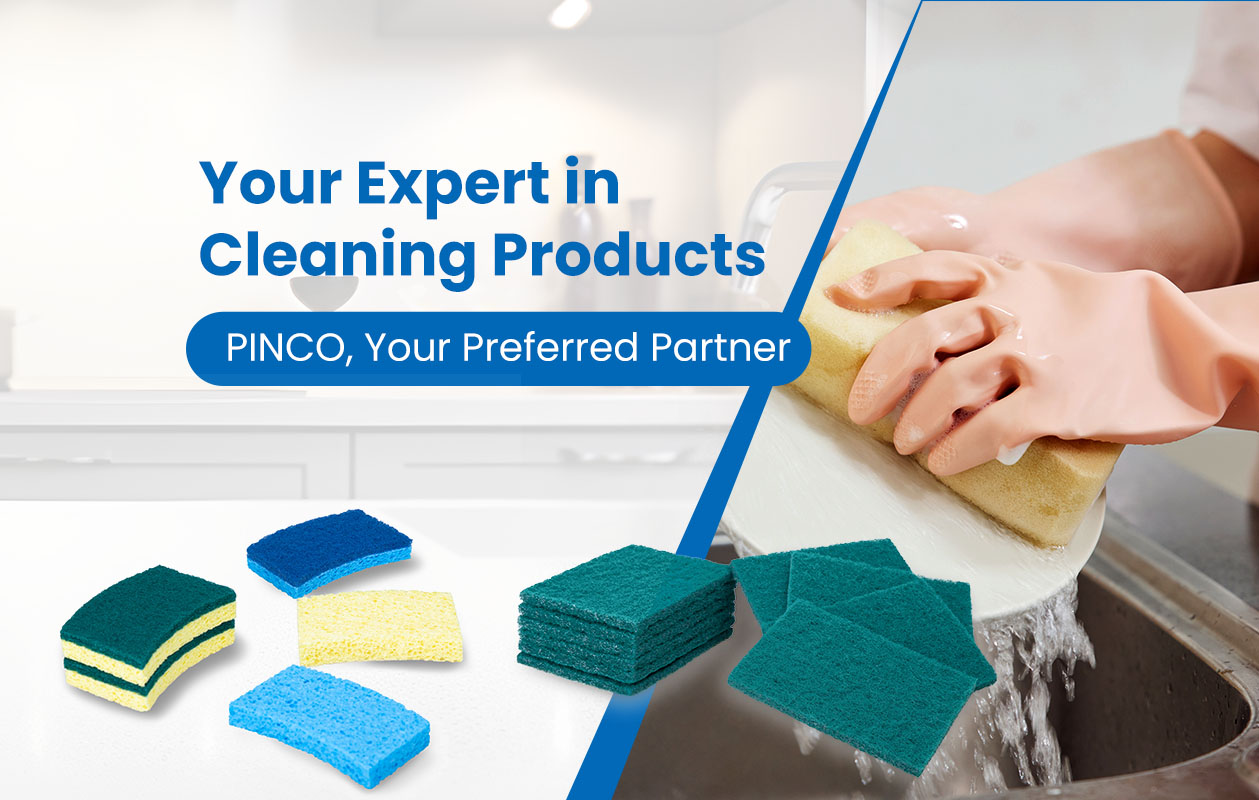
Cellulose Sponge offers better water absorption because its natural fiber structure can hold more liquid, while foam sponge provides better flexibility and durability for general cleaning applications.
The main difference between foam sponge and cellulose sponge is the material structure, absorption mechanism, and cleaning application.
Foam sponge is made from synthetic foam materials with a lightweight porous structure. It provides good flexibility, cushioning ability, and resistance to repeated compression.
Cellulose sponge is made from plant-based cellulose fibers. Its open-cell structure allows it to absorb and retain large amounts of water quickly.
Both sponge types are widely used in cleaning products, but their performance varies depending on whether the priority is absorption capacity, durability, or application environment.
The internal structure of a sponge determines how much liquid it can absorb and how effectively it can release moisture.
Cellulose sponge features interconnected natural fibers that create many channels for water absorption.
This structure helps it:
Absorb water quickly
Hold large amounts of liquid
Release moisture evenly
Clean wet surfaces efficiently
Foam sponge uses air-filled cells that provide good absorption but focuses more on flexibility, softness, and repeated use.
The choice between the two depends on the cleaning task and required moisture performance.
Cellulose sponge generally provides higher water absorption because its fiber network can retain a large amount of liquid.
It is commonly used for:
Kitchen cleaning
Spill absorption
Surface wiping
Professional janitorial tasks
Wet cleaning applications
Cellulose sponge can quickly soak up water and help remove liquid from surfaces.
Foam sponge absorbs water effectively but usually provides better performance in applications where flexibility and durability are more important.
| Comparison Factor | Foam Sponge | Cellulose Sponge |
|---|---|---|
| Material Type | Synthetic foam | Natural cellulose fibers |
| Water Absorption | Good | Excellent |
| Flexibility | Excellent | Good |
| Compression Recovery | High | Moderate |
| Durability | Higher for repeated use | Depends on usage conditions |
| Best Application | General cleaning | High-absorption cleaning |
Yes. Cellulose sponge is better for spill cleaning because it can absorb and retain large amounts of liquid quickly.
Typical applications include:
Kitchen spills
Restaurant cleaning
Food service areas
Bathroom water removal
Facility maintenance
Its high absorption capacity reduces the number of wiping movements needed.
Foam sponge can also handle liquid cleaning but may require more passes when dealing with large amounts of water.
Foam sponge is better when flexibility, softness, and repeated handling are important.
Common applications include:
Household cleaning products
Dishwashing tools
Protective cleaning pads
General wiping applications
Advantages include:
Lightweight structure
Good flexibility
Comfortable handling
Resistance to repeated squeezing
For daily cleaning tasks where extreme absorption is not the main requirement, foam sponge provides practical performance.
The answer depends on the type of cleaning task.
Cellulose sponge performs better for:
Water removal
Liquid absorption
Wet surface cleaning
Foam sponge performs better for:
General wiping
Flexible cleaning
Repeated compression tasks
Many cleaning products combine sponge materials with other layers to achieve a balance between absorption, scrubbing ability, and durability.
Foam sponge generally provides better durability because synthetic foam materials can withstand repeated compression and daily use.
Durability depends on:
Material density
Cell structure
Cleaning frequency
Chemical exposure
Storage conditions
Cellulose sponge provides excellent absorption but may wear faster when exposed to frequent squeezing and heavy mechanical use.
For long-term reusable applications, foam sponge may offer advantages.
Cellulose sponge has advantages in environmental considerations because it is made from renewable plant-based materials.
It is often selected for applications where customers prioritize:
Natural materials
Reduced synthetic content
Foam sponge provides durability and long service life, which can also reduce replacement frequency.
Environmental performance depends on the complete product lifecycle, including manufacturing, usage, and disposal.
The better long-term value depends on the cleaning requirements.
Cellulose sponge provides stronger value for:
High water absorption needs
Spill cleaning
Wet maintenance tasks
Foam sponge provides stronger value for:
Frequent daily use
Long service life
Flexible cleaning applications
Professional buyers should evaluate total performance rather than only initial product cost.
Yes. Both sponge types are suitable for OEM and private label cleaning product development.
Manufacturers can customize:
Sponge size
Material density
Product shape
Layer combinations
Packaging design
Brand labeling
Customized sponge solutions allow cleaning brands to develop products for different market requirements.
The right choice depends on absorption requirements, cleaning frequency, and application environment.
Choose cellulose sponge for:
High water absorption
Spill cleaning
Wet surface maintenance
Professional cleaning tasks
Choose foam sponge for:
Daily cleaning
Flexible applications
Repeated use
Cost-efficient solutions
For maximum water absorption, cellulose sponge provides stronger performance through its natural fiber structure. For durability and flexible daily cleaning, foam sponge offers a practical solution.