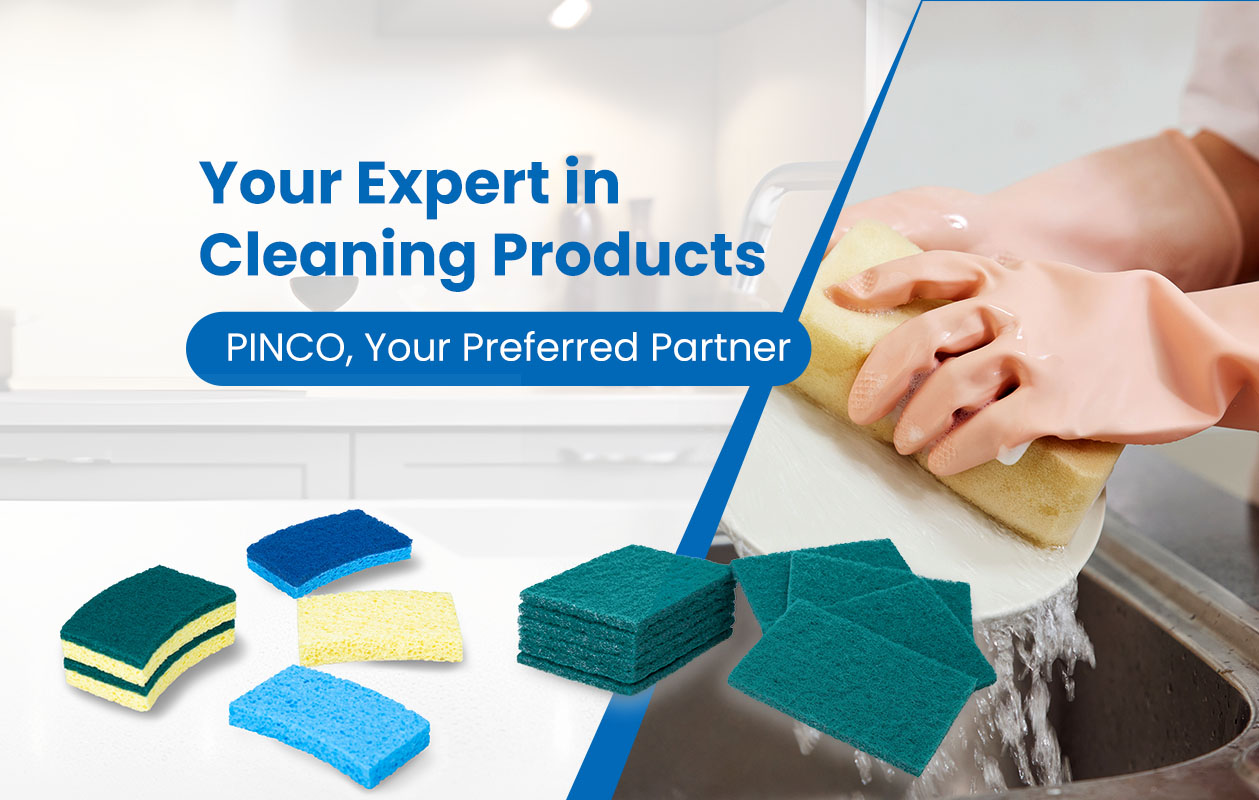
Choosing the right cleaning tool directly affects cleaning efficiency, product durability, and user experience. Steel scourers and sponges are two common solutions used in kitchens, restaurants, hospitality environments, and industrial cleaning applications. While sponges are suitable for light cleaning tasks, steel scourers are designed for removing stubborn grease, burnt food residue, and heavy stains that require stronger friction.
As a professional cleaning products manufacturer, PINCO develops different cleaning solutions including metal scourers, stainless steel scourers, sponge scrubbers, and customized cleaning products. By controlling material selection, production processes, and quality inspections, PINCO helps customers choose suitable cleaning tools for different market applications. (PINCO)
The main difference between steel scourers and sponges comes from their cleaning structure. A sponge mainly relies on water absorption and soft friction, while a steel scourer uses tightly formed metal wires to create stronger mechanical action.
Steel scourers are commonly used for cookware, grills, baking trays, and stainless steel equipment where grease and carbonized residue are difficult to remove. Sponges are more suitable for daily washing tasks such as removing light food particles and cleaning delicate surfaces.
| Comparison | Steel Scourers | Sponges |
|---|---|---|
| Cleaning strength | High friction performance | Moderate cleaning ability |
| Suitable stains | Burnt food, grease, carbon buildup | Light dirt and daily residue |
| Durability | Strong structure for repeated scrubbing | Faster wear under heavy use |
| Water absorption | Limited | Excellent absorption |
| Application | Heavy-duty cleaning | General cleaning |
According to cleaning industry research, mechanical friction is one of the key factors affecting stain removal efficiency. Stronger abrasive performance helps reduce cleaning time when dealing with hardened residues, especially in commercial kitchen environments.
Steel scourers are manufactured from metal wire that is curled, wound, or formed into flexible cleaning structures. This design creates multiple contact points during use, allowing the tool to break down tough residue more effectively.
The main advantages include:
Burnt food, oil stains, and carbon deposits often become firmly attached to cookware surfaces after repeated heating. A stainless steel scourer provides higher friction compared with traditional sponge materials, helping remove difficult buildup faster.
In restaurants, hotels, and food service environments, cleaning tools may be used many times every day. A durable metal structure helps maintain cleaning performance during repeated applications.
Different cleaning requirements need different metal materials. PINCO provides stainless steel, galvanized steel, copperized steel, and brass scourer solutions based on cleaning strength, corrosion resistance, and market positioning requirements. (PINCO)
When comparing a manufacturer with a trading company, production capability is an important factor. A direct manufacturer can control raw materials, production parameters, inspection standards, and customization options throughout the process.
The manufacturing process of steel scourers usually includes:
Metal wire material inspection
Wire forming and spiral structure production
Product shaping and weight adjustment
Surface treatment and cleaning process
Quality inspection before packaging
Customized packaging preparation
PINCO operates its own cleaning product manufacturing facility in Jiangmen, Guangdong, covering approximately 20,000 square meters. The factory includes production, quality control, design, shipping, and research teams to support stable manufacturing and OEM/ODM services. (PINCO)
For cleaning products, small differences in wire quality, product weight, and structure can influence final performance. Professional manufacturers need strict inspection procedures to maintain consistency.
| Quality Control Item | Purpose |
|---|---|
| Metal wire inspection | Ensure material reliability |
| Weight checking | Maintain product specification accuracy |
| Shape inspection | Prevent deformation during use |
| Rust resistance testing | Improve product durability |
| Packaging inspection | Protect products during transportation |
For export markets, product packaging, material compliance, and stable supply capability are also important considerations. A qualified cleaning product manufacturer should provide consistent production management from raw material selection to final shipment.
Different markets may require different product specifications, packaging styles, and branding solutions. Compared with purchasing standard products from a trader, working directly with a manufacturer provides more flexibility in product development.
Common customization options include:
Product weight adjustment
Wire material selection
Size and shape customization
Private label packaging
Retail packaging design
Bulk supply planning
PINCO supports OEM and ODM cleaning product projects by combining manufacturing experience with customized production capabilities. Its product range covers Metal Steel Scourers, sponge scrubbers, Scouring Pads, brushes, and other cleaning solutions. (PINCO)
Before starting a cleaning product project, several factors should be evaluated:
Target application and cleaning intensity
Required material standard
Product weight and size specification
Packaging requirements
Quality inspection process
Production capacity and delivery stability
Export market requirements
Choosing between steel scourers and sponges depends on the cleaning environment. Sponges provide convenience for everyday cleaning, while steel scourers deliver stronger performance for demanding applications. For heavy grease, burnt residue, and industrial cleaning needs, selecting a reliable steel scourer manufacturer ensures better product consistency and long-term supply stability.