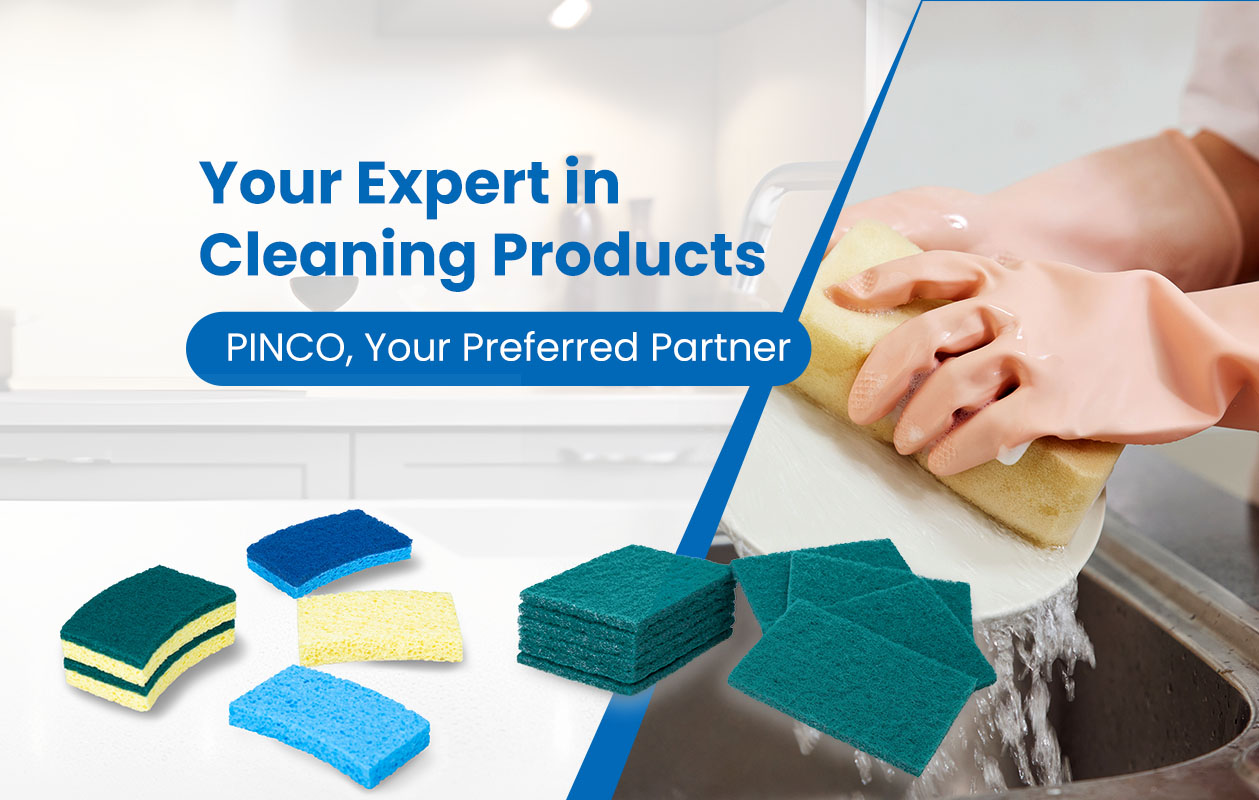
Plastic sponge and metal scourer are both common cleaning tools, but they serve different cleaning needs. For kitchen cleaning, retail shelves, wholesale supply, and commercial cleaning projects, the right choice depends on stain level, surface material, durability requirement, packing plan, and target market positioning.
A plastic sponge is usually softer and more suitable for daily cleaning, dishwashing, light grease removal, and delicate surface care. It can hold water and detergent well, so users often choose it for cups, plates, bowls, tiles, and general kitchen surfaces.
A metal scourer is stronger. It is made from coiled metal wire and is mainly used for burnt food, heavy grease, grills, ovens, pans, and stubborn residue. stainless steel scourers are popular because stainless steel contains chromium, which helps improve corrosion resistance in wet kitchen environments.
| Item | Plastic Sponge | Metal Scourer |
|---|---|---|
| Cleaning Power | Light to medium cleaning | Heavy-duty scrubbing |
| Main Use | Dishes, cups, tiles | Pans, grills, ovens |
| Texture | Soft and absorbent | Firm and abrasive |
| Water Holding | Strong | Limited |
| Market Position | Daily household cleaning | Kitchen heavy cleaning |
For bulk orders, buyers should not only compare price. A trader may offer both sponge and scourer products, but often cannot control foam density, abrasive layer bonding, metal wire diameter, coil density, product weight, or packaging strength.
A direct manufacturer can manage raw material inspection, production process, quality checking, packing, and delivery planning. PINCO operates from Jiangmen, Guangdong, with about 20,000 square meters of factory area, supporting cleaning products such as sponge scrubbers, stainless steel scourers, Scouring Pads, Floor Pads, cleaning brushes, car sponges, magic sponges, and cellulose sponges.
OEM / ODM projects can include sponge size, foam density, abrasive layer, scourer weight, wire type, packing quantity, private label bag, barcode label, display box, carton layout, and mixed cleaning kits. Before mass production, buyers should test samples for cleaning strength, hand feel, surface suitability, water absorption, rust resistance, and packing appearance.
Key inspection points include sponge density, bonding strength, cutting size, metal material, wire thickness, product weight, loose wire control, rust resistance, bag sealing, carton strength, and label accuracy. Export orders should also confirm packaging language, barcode requirements, shelf life expectations, carton marks, and shipment documents.
Plastic sponge is better for daily cleaning, while metal scourer is better for stubborn stains. PINCO can support stable bulk supply, customized packaging, and export-ready cleaning product solutions for both categories.