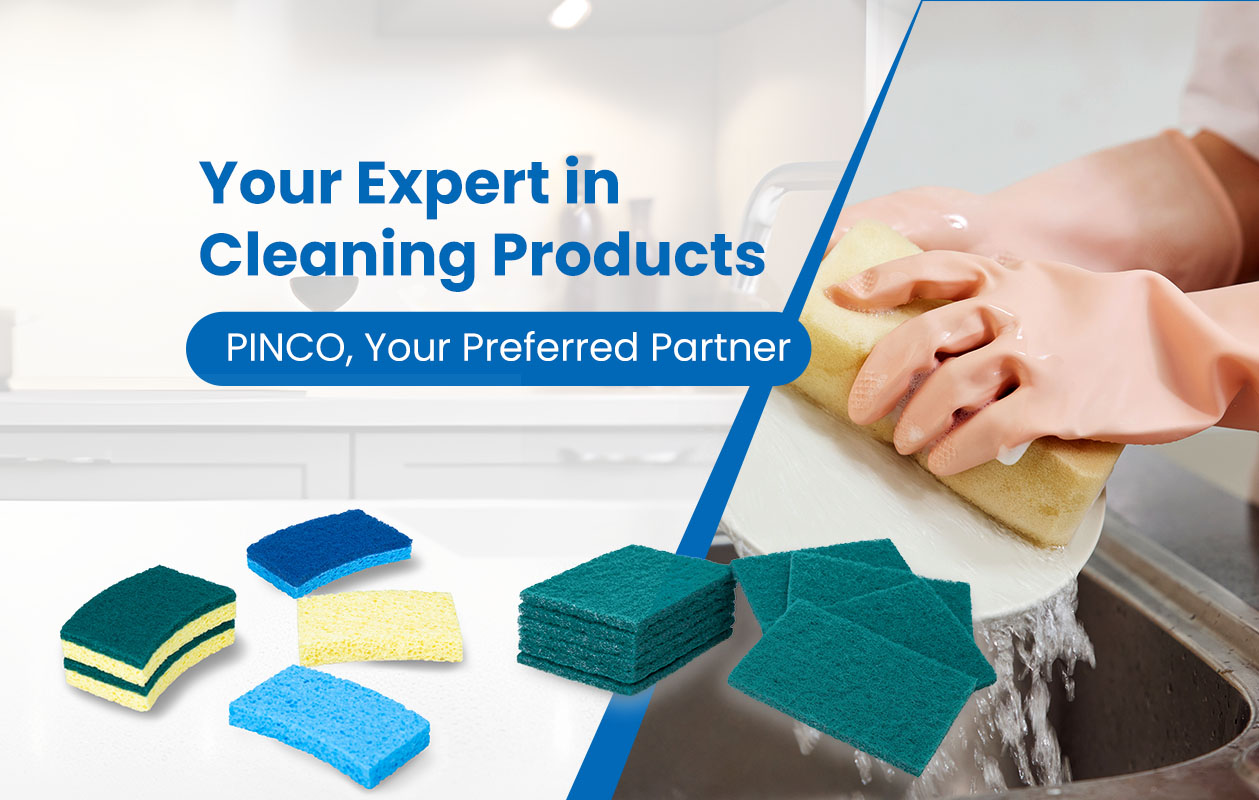
Choosing between OEM and ODM in Scouring Pad sourcing affects cost, lead time, product control, and long term margin. For cleaning brands, the real question is not only custom or standard. It is whether the supplier is a true factory with process control or a trader managing outside production. PINCO positions itself as a manufacturer in Jiangmen with a 20,000 square meter facility, two main scouring pad production lines, and internal teams for design, quality control, R&D, and shipment support. That structure matters when supply must stay stable across repeated bulk orders.
A manufacturer controls raw material selection, web forming, bonding, cutting, inspection, and batch release. A trader may offer flexibility, but consistency often depends on outside factories. In scouring pad programs, this difference becomes visible in color stability, abrasive feel, pad density, packaging accuracy, and complaint handling. For project sourcing, a factory based model usually gives better traceability and faster technical feedback during sample revision and bulk production. PINCO highlights integrated production lines and a dedicated QC team, which is a stronger base for repeat supply than a trading only model.
OEM works best when the buyer already has a target size, color, abrasive level, packaging layout, and market position. ODM is faster when the buyer wants to build on proven factory designs and adjust details later. PINCO describes its workflow as specification confirmation, sample validation, performance benchmarking, packaging engineering, and controlled mass production release. That makes OEM suitable for private label programs with strict briefs, while ODM reduces development time for buyers who want speed to market.
scouring pads are typically nonwoven structures made from synthetic fibers bonded with resin and abrasive particles. Material control decides whether the product is non scratch, medium duty, or heavy duty. In export business, buyers should check fiber quality, bonding chemistry, abrasive type, thickness tolerance, and odor stability before approving volume orders. PINCO states that it controls foam components, nylon fibers, resin based bonding materials, and related chemical materials through structured inspection.
A practical project sourcing checklist should include raw material review, sample approval, bonding strength, dimension accuracy, packaging drop safety, carton marking, and shipment consistency. Export market compliance should also be reviewed early. The European Commission notes that REACH entered into force in 2007 and places responsibility on industry to manage chemical risks and provide safety information. For scouring pad supply, that means chemical control is not a side issue. It is part of market access and customer trust.
| Model | Best for | Main advantage | Main checkpoint |
|---|---|---|---|
| OEM | Buyers with clear specs | Strong product differentiation | Sampling and batch consistency |
| ODM | Buyers needing faster launch | Shorter development cycle | Design fit for target market |
| Factory direct supply | Long term bulk programs | Better traceability and QC control | Capacity and inspection system |
For brands sourcing at scale, the safest choice is usually a manufacturer that can combine product development, production control, and shipment support in one system. PINCO presents that combination through its factory scale, OEM and ODM service, dedicated scouring pad lines, and structured QC process. That makes it more practical for buyers comparing OEM versus ODM in scouring pad production, especially when the goal is stable bulk supply, cleaner compliance handling, and fewer surprises after sample approval.