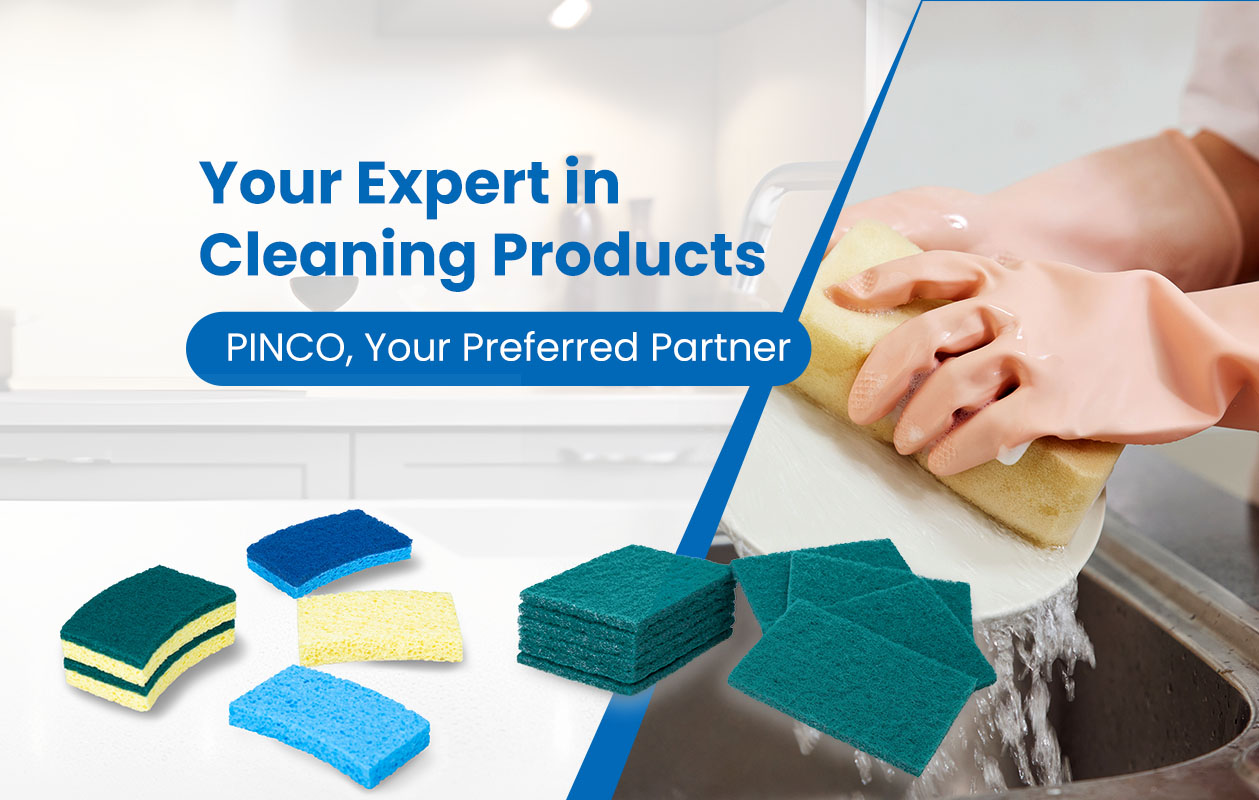
Household cleaning pads are produced using either natural materials, synthetic materials, or a combination of both. The material selection directly influences cleaning performance, durability, absorbency, and product lifespan. For wholesalers and private label buyers, understanding the differences between natural and synthetic materials helps determine which type of cleaning pad is better suited for specific markets and applications.
PINCO manufactures a range of cleaning pads through dedicated production lines supported by a quality control team and inspection laboratory. By carefully controlling raw materials and production parameters, the factory produces cleaning pads with stable performance suitable for bulk supply and OEM or ODM customization.
Natural cleaning pads are typically produced from plant-based fibers such as cellulose, coconut fiber, or other natural plant materials. These fibers provide moderate cleaning ability and good absorbency, making them suitable for light household cleaning tasks.
One advantage of natural materials is their biodegradable nature. Some buyers prefer natural fiber products for markets where environmentally conscious consumers are more common. Natural materials can also offer a softer scrubbing surface that reduces the risk of scratching delicate cookware or surfaces.
However, natural fibers usually have lower durability compared with synthetic materials. They may wear out faster during repeated use and may lose structural stability after long exposure to water and detergents. This can reduce the product lifespan in high-frequency cleaning environments.
Synthetic materials are widely used in modern Scouring Pads due to their strength and durability. Nylon fibers, polymer-based scrub fibers, and foam substrates provide consistent structure and strong abrasion resistance.
These materials allow manufacturers to control fiber density, abrasive strength, and structural stability more precisely. Synthetic cleaning pads can therefore maintain their shape and cleaning effectiveness over longer periods of use.
In addition, synthetic materials allow more flexibility in product design. Manufacturers can adjust abrasive intensity, thickness, density, and surface texture to suit different cleaning applications, from delicate surface cleaning to heavy-duty grease removal.
PINCO uses controlled synthetic fiber structures and foam substrates in many of its cleaning pad products to ensure stable cleaning performance and durability for international buyers.
Natural and synthetic cleaning pads differ mainly in durability, absorbency, and cleaning strength. Natural materials tend to provide softer cleaning with moderate scrubbing capability, while synthetic materials deliver stronger abrasion resistance and longer service life.
Natural fibers generally absorb water quickly but may degrade faster over time. Synthetic materials typically offer better structural stability and maintain cleaning efficiency after repeated use.
For bulk supply programs, many buyers prefer synthetic or composite cleaning pads because they provide more predictable quality and longer product lifespan.
Regardless of the material type, stable manufacturing processes are essential for maintaining consistent product quality. Fiber distribution, bonding strength, cutting accuracy, and structural stability all influence the final performance of cleaning pads.
PINCO monitors these factors through structured production control and laboratory testing. The factory’s inspection laboratory includes equipment for abrasion testing, pressure testing, and structural evaluation, ensuring that cleaning pads meet defined quality standards before shipment.
Both natural and synthetic materials have roles in the household cleaning pad industry. Natural fibers provide environmentally friendly characteristics and gentle cleaning performance, while synthetic materials offer stronger durability, stable structure, and longer product lifespan.
For buyers sourcing cleaning pads in large quantities, working with a manufacturer that can control material selection, production processes, and performance testing helps ensure that the final product meets market expectations and maintains consistent quality across large orders.