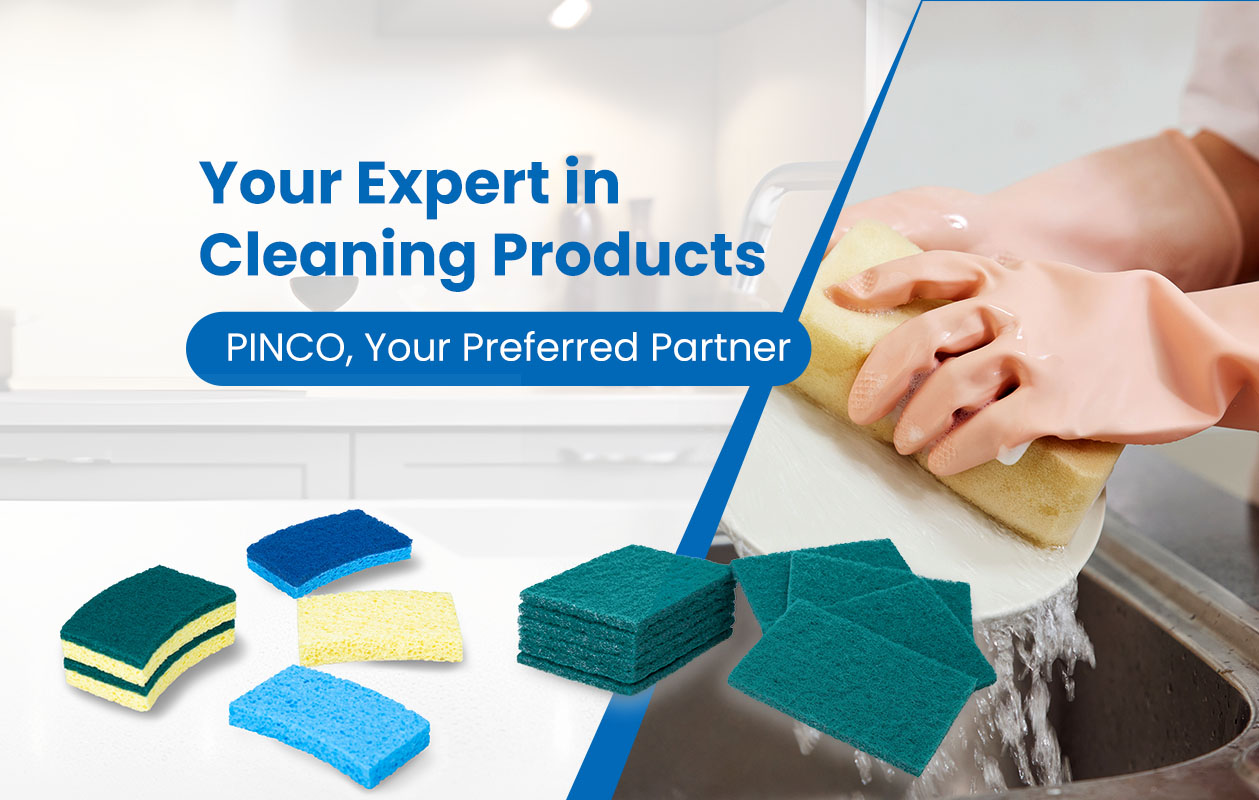
Chemical components play an important role in the production of Scouring Pads and cleaning Sponges. Adhesives, bonding agents, dyes, and polymer additives are commonly used during fiber processing, foam formation, and bonding stages. Because these chemicals may come into contact with surfaces used for food preparation or daily household cleaning, manufacturers must ensure that all materials comply with environmental and safety regulations required in international markets.
PINCO manufactures cleaning pads and scouring products through integrated production lines supported by a quality control team and inspection laboratory. By controlling chemical materials used during production and implementing structured inspection procedures, the factory ensures that its products meet regulatory expectations for global distribution and OEM or ODM supply.
Chemical compliance begins with raw material selection. The polymers, bonding agents, and dyes used in scouring pad production must be carefully evaluated to ensure they do not release harmful substances during normal use. This includes verifying the safety of foam components, nylon fibers, and resin-based bonding materials.
Manufacturers normally require suppliers to provide detailed material specifications and safety documentation. Incoming material inspection helps confirm that these chemicals meet the defined safety criteria before entering the production process.
Ensuring chemical stability is essential because cleaning pads often operate in wet environments and may be exposed to detergents, hot water, and repeated friction.
Adhesives and bonding chemicals are widely used to combine foam layers, scrub fibers, and abrasive materials into a single product structure. If these chemicals are poorly controlled, they may affect product durability or create safety concerns.
Manufacturing standards typically focus on bonding strength, curing stability, and chemical consistency. Proper curing temperatures and controlled application help ensure that bonding materials remain stable throughout the product’s service life.
Quality inspectors often evaluate bonding performance through tear resistance testing and structural stability checks. These procedures confirm that chemical bonding agents function correctly without compromising product safety.
Environmental compliance also applies to chemical handling within the production facility. Manufacturers must manage chemical storage, usage, and disposal according to environmental guidelines. Proper ventilation, controlled storage conditions, and safe handling procedures help prevent contamination and protect worker safety.
Efficient production processes can also reduce chemical waste and improve resource utilization. By optimizing manufacturing conditions and monitoring chemical consumption, factories can maintain consistent product quality while minimizing environmental impact.
PINCO integrates production control with quality management to ensure that chemical usage remains stable across its scouring pad manufacturing lines.
Verification of chemical compliance often includes laboratory testing and documentation. Manufacturers may record material specifications, supplier certifications, and internal testing results to confirm that chemical components meet safety expectations.
PINCO operates an inspection laboratory equipped with testing instruments such as abrasion testers, pressure testing devices, microscopes, and measurement equipment. These tools help verify product durability and structural stability after chemical bonding processes are completed.
Maintaining inspection records also supports traceability, allowing manufacturers to track production batches and verify compliance if questions arise after shipment.
Cleaning products exported to international markets must meet regulatory expectations related to chemical safety and product quality. Buyers frequently require manufacturers to follow structured quality management systems and maintain documentation verifying material safety and production consistency.
PINCO operates under ISO-based quality management and maintains organized inspection procedures to support stable supply for global distributors and wholesale buyers.
Regulatory compliance for chemicals used in scouring pad production is essential for ensuring product safety, environmental responsibility, and long-term supply reliability. By carefully selecting chemical materials, controlling bonding processes, maintaining proper documentation, and verifying performance through inspection procedures, manufacturers can meet international safety expectations.
For buyers sourcing cleaning pads and sponges in bulk, working with a manufacturer that implements structured chemical management and quality control systems provides greater confidence in product safety and export compliance.