
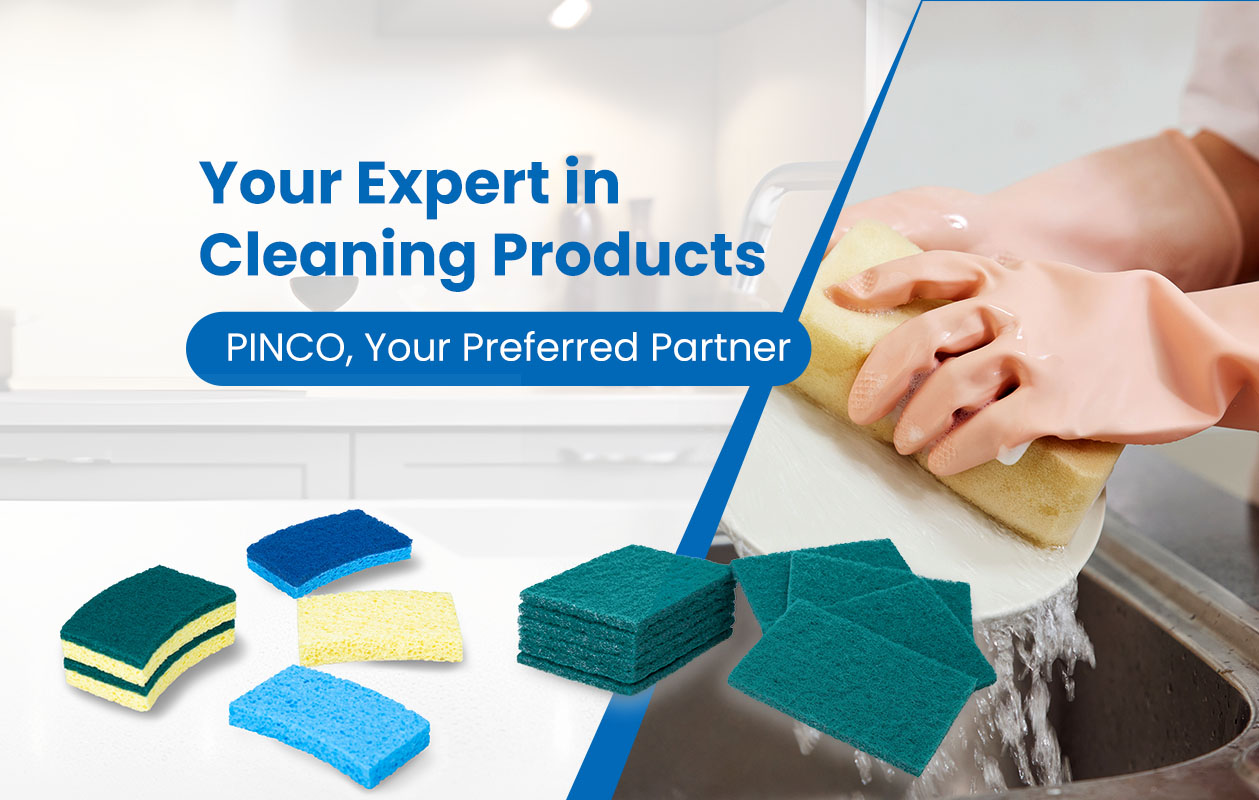
Material selection plays a crucial role in determining the cleaning performance and wear rate of cleaning pads and scouring products. The combination of fibers, abrasives, and supporting materials directly affects how effectively a pad removes grease and stains, as well as how long it can maintain its structure during repeated use. For distributors and private label buyers, understanding how materials influence product performance is essential when sourcing cleaning products in bulk.
PINCO manufactures a variety of cleaning pads through dedicated production lines supported by a quality control team and inspection laboratory. By carefully selecting raw materials and controlling production processes, the factory ensures that cleaning pads deliver balanced cleaning strength and reliable durability across large production batches.
Fiber Structure And Cleaning Efficiency
The fiber network forms the primary structure of most Scouring Pads. Materials such as nylon fibers are commonly used because they provide flexibility, strength, and resistance to repeated friction. A stable fiber structure allows the pad to maintain its shape during use while distributing abrasive particles evenly across the cleaning surface.
If the fiber structure is too loose, the pad may deform quickly and lose cleaning effectiveness. If the fibers are too dense, the pad may become overly rigid and less capable of holding water and detergent. Maintaining the correct fiber density ensures effective contact with surfaces while preserving durability.
Abrasive Material And Scrubbing Strength
Abrasive materials determine the actual scrubbing power of a cleaning pad. Synthetic fibers combined with abrasive particles allow the pad to remove stubborn residues such as grease, burnt food, or industrial dirt.
However, abrasive strength must be carefully balanced. Excessive abrasiveness may cause scratches on cookware or equipment surfaces, while insufficient abrasiveness may reduce cleaning efficiency. Manufacturers typically evaluate abrasive distribution and bonding strength to ensure that scrubbing performance remains consistent across the pad surface.
Foam And Absorbency Performance
In Sponge scourers and composite cleaning pads, foam layers play an important role in water absorption and detergent retention. High-quality foam materials allow the pad to hold liquid effectively, which helps loosen grease and improves cleaning efficiency.
Foam density, pore structure, and elasticity influence how well the pad absorbs and releases liquid during use. Materials that recover quickly after compression provide better long-term usability and support repeated cleaning cycles without losing shape.
Material Durability And Wear Resistance
Wear rate refers to how quickly a cleaning pad deteriorates during use. Materials with strong bonding and stable fiber networks generally maintain their structure longer. Durability testing often focuses on abrasion resistance, tear strength, and structural recovery after repeated pressure.
PINCO evaluates these characteristics through inspection procedures using abrasion testers, pressure testing equipment, and other laboratory instruments. These tests help confirm that the selected materials can withstand repeated friction without rapid degradation.
Manufacturing Control And Material Integration
Although material quality is important, manufacturing control also influences the final performance of cleaning pads. Fiber formation, bonding processes, curing temperature, and cutting accuracy all affect how materials interact within the product structure.
By controlling these production parameters and conducting in-process inspections, manufacturers can ensure that the chosen materials deliver consistent cleaning performance and predictable wear behavior across large production volumes.
Conclusion
Material selection significantly influences both cleaning effectiveness and wear rate in scouring pads and cleaning sponges. Proper combinations of fibers, abrasives, and foam substrates allow the product to balance scrubbing strength, absorbency, and durability.
For buyers sourcing cleaning products in bulk, selecting a manufacturer that carefully controls material standards, production parameters, and performance testing helps ensure stable product quality and reliable long-term supply.