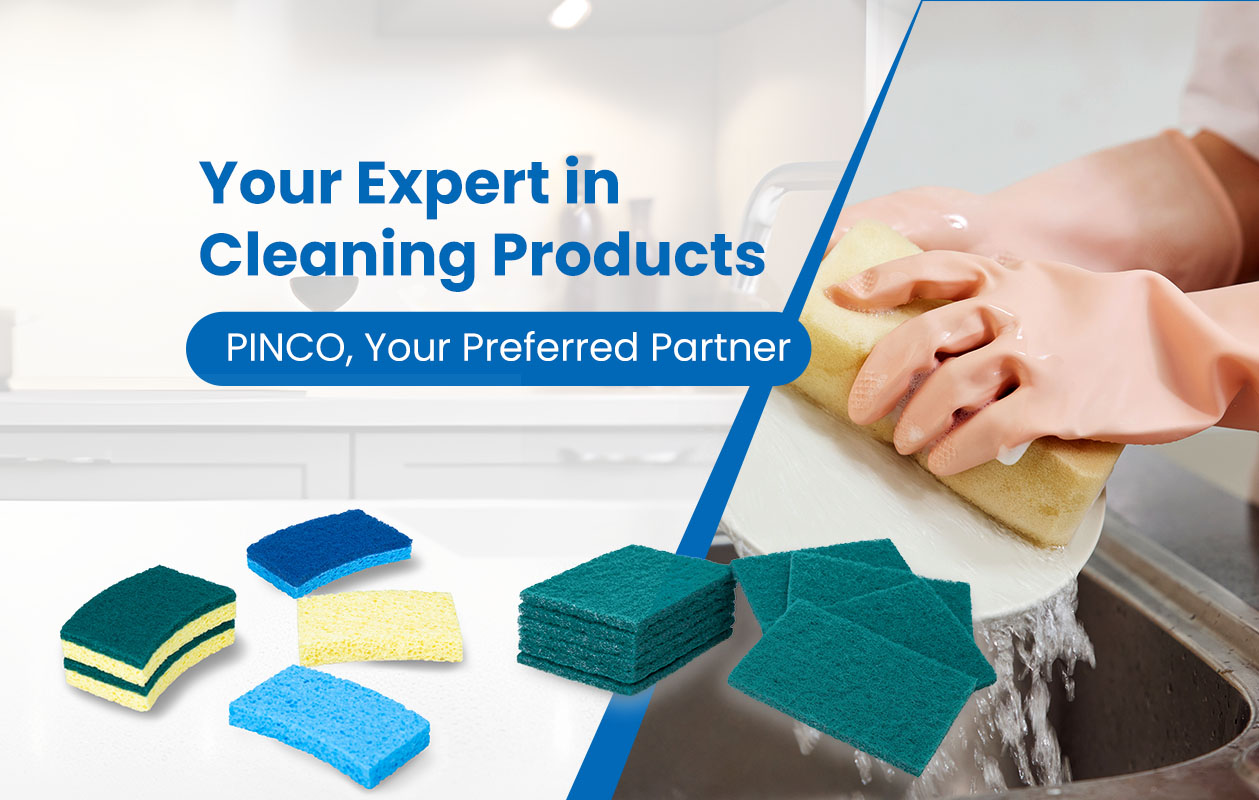
In hotel environments, kitchen Scouring Pads are high-frequency consumables used in food preparation areas, dishwashing stations, and back-of-house sanitation zones. Because usage is daily and volume is substantial, contractors must evaluate durability, hygiene standards, cost efficiency, and supply stability—not just unit price.
A structured procurement checklist ensures consistent performance, reduces operational disruption, and supports long-term hospitality contracts.
As a professional cleaning products manufacturer with dedicated scouring pad production lines and integrated quality control systems, PINCO supports bulk hospitality supply programs with OEM/ODM flexibility and export-ready packaging.
Hotel kitchens vary in intensity. Clarify:
Type of kitchen (fine dining, buffet, banquet, central kitchen)
Cleaning frequency per shift
Surfaces being cleaned (stainless steel, cookware, tile, food prep counters)
Chemical exposure conditions
Heavy-duty commercial kitchens require stronger bonding and higher abrasion resistance than standard retail-grade pads.
Specify correct abrasion intensity:
Non-scratch for delicate surfaces
Light or medium duty for routine dishwashing
Heavy or extra heavy duty for grease-intensive cookware
Color coding should correspond to defined structural differences—not cosmetic variation only.
Confirm measurable performance standards:
Abrasive strength consistency
Tear resistance
Thickness stability
Density uniformity
Bonding integrity under wet conditions
Pads used in hotel kitchens must withstand repeated soaking and chemical exposure without delamination.
Direct manufacturer sourcing provides:
Raw material control
Production transparency
Stable output capacity
Customization support
Structured QC documentation
Trader-based sourcing often lacks full visibility into production processes and may create batch variability.
For multi-property hotel contracts, manufacturer-based supply reduces long-term risk.
Before confirming supplier approval, verify:
Abrasive consistency testing
Thickness and density measurement procedures
Bonding durability inspection
Batch-level release documentation
Inspection before shipment
Manufacturers operating under ISO-aligned systems offer stronger process stability.
Hotels require steady replenishment.
Confirm:
Dedicated scouring pad production lines
Daily output capacity
Lead time reliability
Raw material sourcing stability
Surge capability during peak occupancy seasons
Manufacturers with structured departments and stable production scheduling can support large hospitality contracts more effectively.
Kitchen cleaning pads are typically stored in centralized hotel warehouses.
Verify:
Carton strength for stacking
Moisture-resistant packaging
Pallet optimization
Clear carton labeling for internal distribution
Bulk pack configuration to reduce storage waste
Proper packaging reduces warehouse damage and improves internal inventory management.
Large hotel chains may require:
Custom sizes
Private labeling
Color-coded departmental systems
Customized packaging formats
Specific branding integration
Structured OEM development ensures customization without disrupting production efficiency.
PINCO supports OEM/ODM programs for commercial clients requiring differentiated product lines.
Evaluate total procurement cost, including:
Volume discount tiers
Long-term supply agreements
Freight optimization
Reduced defect risk
Stable pricing through forecast alignment
For hospitality contracts, predictable cost over time is more valuable than short-term price reductions.
For international hotel projects, confirm:
Country-of-origin labeling
Export documentation accuracy
Proper carton marking
Packaging compliance for destination markets
Batch traceability
Export-ready suppliers reduce customs delays and contract risk.
Before signing supply agreements, confirm:
Direct manufacturing capability
Defined abrasion grade specifications
Documented QC processes
Scalable production capacity
Structured packaging engineering
OEM/ODM support if required
Export documentation readiness
Kitchen scouring pads for hotels are not simple consumables—they are operational essentials that influence hygiene standards, labor efficiency, and overall cost control.
A structured procurement checklist ensures:
Correct abrasion selection
Stable durability
Consistent bulk supply
Quality verification
Efficient warehouse handling
Compliance readiness
Professional manufacturers with integrated production systems—such as PINCO—provide the structural foundation needed for reliable, repeatable supply across hospitality cleaning programs.