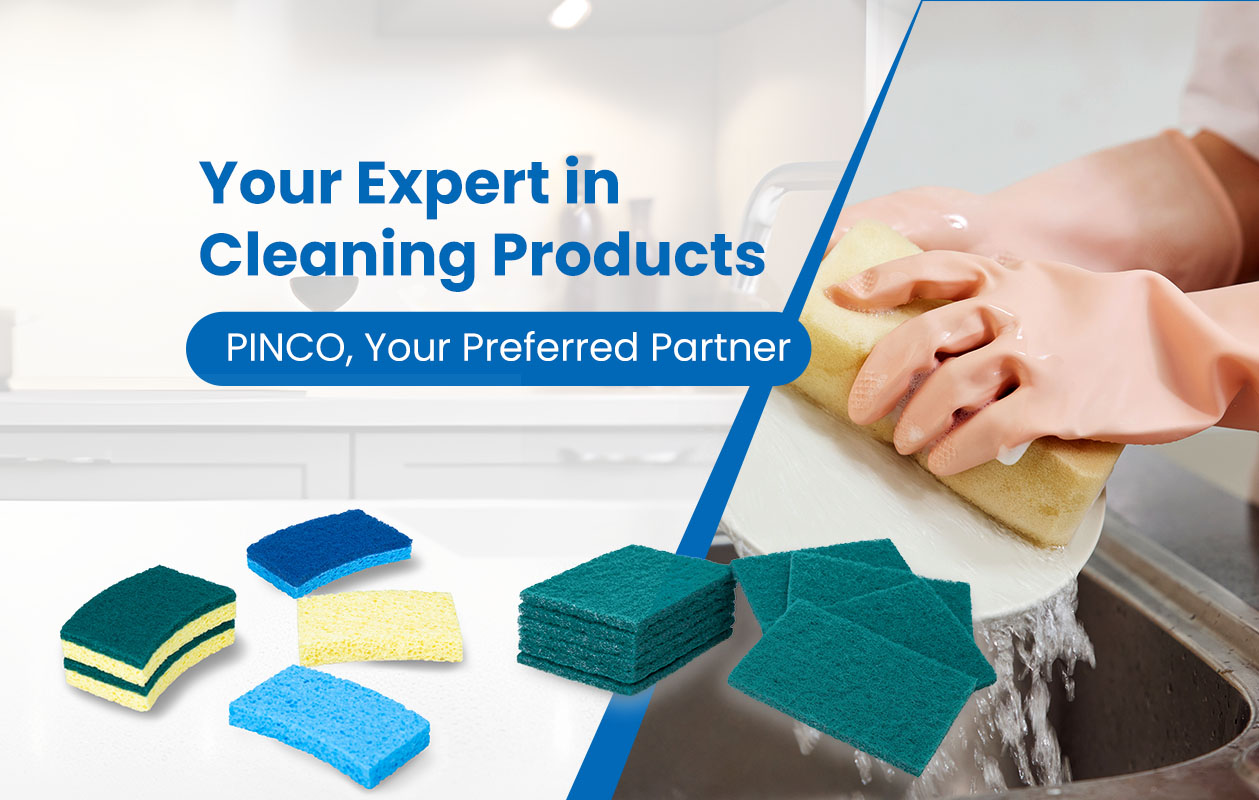
Manufacturers are responding to growing environmental concerns by rethinking how Scouring Pads are designed, made, and used. Rather than simply minimizing cost, eco-friendly development focuses on material sustainability, end-of-life impact, and product lifespan. The result is a range of innovative solutions that reduce waste, lower emissions, and help facilities meet green cleaning goals without sacrificing performance.
Below is a structured look at how eco-friendly scouring pads are evolving and what that means for buyers.
Some scouring pads are now made from recycled PET, nylon, or polyester, sourced from:
Recovered plastic bottles
Post-industrial fiber waste
Textile offcuts
Environmental benefits
Reduces demand for virgin plastics
Diverts waste from landfills
Incorporates existing materials into productive use
Performance notes
High-quality recycling processes can preserve abrasion properties, but consistent fiber quality and bonding control are essential for industrial cleaning performance.
Eco-friendly manufacturers increasingly use plant-based materials such as:
Coconut coir
Cellulose (wood pulp)
Cotton
Jute
These natural fibers can be composted under the right conditions, especially when no synthetic binders or coatings are used.
Key considerations
Not all biodegradable pads break down easily in home compost — some require industrial composting conditions
Pads must be chemically uncontaminated at end of life to compost safely
Traditional scouring pads may contain additives, coatings, or bonding resins that:
Resist breakdown
Contain volatile chemicals
Release microplastics during abrasion
Eco-focused products aim to replace these with:
Plant-derived binders
Water-based coatings
Non-toxic abrasion enhancers
This shift reduces the environmental footprint both during use and disposal.
One of the most effective environmental strategies is to use fewer pads overall. Higher durability means:
Fewer replacements
Less waste
Lower cumulative emissions
Manufacturers are improving durability by:
Optimizing fiber bonding
Balancing abrasion with structural strength
Engineering pad geometry for longevity
Durability complements sustainability by reducing total material throughput.
Eco-aware buyers increasingly ask:
Where do the raw materials come from?
Are emissions monitored during production?
Is there a roadmap for recyclability or compostability?
Manufacturers respond with:
Material sourcing disclosures
Environmental product declarations
Lifecycle assessment summaries
This transparency supports purchasing decisions aligned with sustainability goals.
A small but growing number of firms offer:
Take-back or return programs
Aggregation of used pads for specialized recycling
Partnerships with waste-to-resource facilities
Closed-loop systems ensure materials are reclaimed or processed responsibly rather than entering general waste streams.
Eco innovators explore:
Agricultural byproducts
Seaweed-based fibers
Renewable, fast-growing plant sources
These materials support:
Lower carbon footprint
Reduced reliance on petroleum
Renewable material cycles
Some manufacturers reduce environmental impact by:
Sourcing materials regionally
Producing closer to demand centers
Minimizing long-distance transport
Lower transport emissions increasingly factor into eco-friendly product design.
Next-generation eco pads aim for:
Minimal material mixes
Easy separation of components
End-of-life reuse pathways
This design focus makes it possible to:
Separate fibers from backing
Recycle or compost parts independently
Reduce landfill load
Eco-friendly scouring pads increasingly carry:
ASTM D6400 or EN 13432 (biodegradable/compostable standards)
Recycled content verification
Corporate sustainability reporting
These certifications help buyers verify that performance claims align with real environmental attributes.
Biodegradable or plant-fiber pads offer:
Lower microplastic risk
Easier disposal in compost systems (where available)
Strong performance on light soils
Recycled and durable pad variants offer:
Strong cleaning and abrasion performance
Lower total waste output
Better alignment with corporate sustainability targets
In food processing or healthcare settings, eco choices must still maintain:
Cleanability
Chemical resistance
Hygiene compliance
Eco pads designed for durability and material safety can meet these needs when engineered correctly.
Manufacturers are approaching eco-friendly scouring pad design through multi-dimensional innovation—not just a single material swap. Sustainability strategies include:
Recycled materials
Biodegradable fibers
Durable long-life engineering
Transparent sourcing
End-of-life planning
Certifications and validation
The result is a growing lineup of eco-conscious scouring pads that balance environmental responsibility with real-world performance. For buyers—from households to large facilities—this evolution offers meaningful opportunities to reduce environmental impact without sacrificing cleaning efficiency.