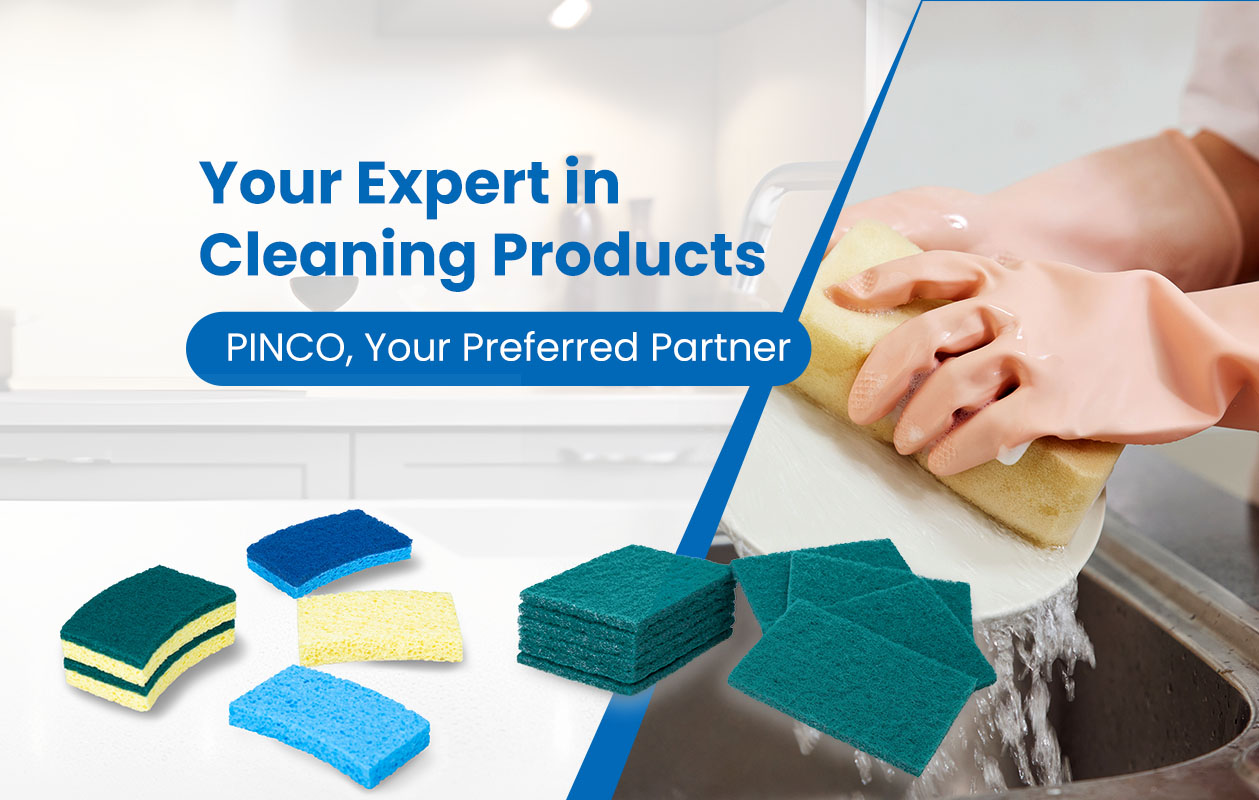
In most cases, Scouring Pads cannot be safely composted or recycled after use, but there are important exceptions. Whether a scouring pad can enter a composting or recycling stream depends on its material composition, how it was used, and contamination level. Understanding these limits helps avoid improper disposal that can cause more harm than good.
Below is a clear, practical breakdown.
Most conventional scouring pads are made from:
Synthetic fibers such as nylon or polyester
Abrasive minerals bonded with resin
Sometimes combined with Sponge layers
These multi-material constructions cannot be economically separated, which makes standard recycling impractical.
After use, scouring pads typically contain:
Food residue
Oils and grease
Cleaning chemicals
This contamination:
Disqualifies them from plastic recycling streams
Creates hygiene and processing risks
Makes cleaning them for recycling unrealistic
As a result, most recycling facilities reject used scouring pads outright.
Scouring pads can be composted only if they are made entirely from natural, biodegradable materials, such as:
Coconut coir
Cellulose fibers
Cotton or jute
Natural sponge
And only if they contain:
No synthetic fibers
No plastic binders
No synthetic abrasives
Even then, composting success depends on conditions.
Industrial composting may break down thick natural fibers over time
Home composting often struggles due to limited heat and moisture
Many “eco” pads are only partially biodegradable, meaning they will not fully decompose in real compost systems.
Even biodegradable pads may not be compostable after use if they have absorbed:
Strong detergents
Degreasers
Chemical cleaners
Chemical contamination can:
Harm compost microbes
Introduce unwanted residues into compost
Many scouring pads are made from recycled materials, but that does not mean they can be recycled again.
Key distinction:
Recycled content refers to input material
Recyclability refers to end-of-life handling
Most scouring pads are single-use lifecycle products from a recycling perspective.
In rare cases, some suppliers offer:
Closed-loop take-back programs
Specialized recycling for production waste
These programs are not common and usually limited to specific regions or customers.
In practice:
The majority go to landfill
Some are incinerated with waste-to-energy recovery
Very few are composted or recycled
This is why durability and reduced replacement frequency matter more environmentally than disposal method alone.
Since disposal options are limited, impact reduction should focus on use phase decisions:
Choose longer-lasting scouring pads
Avoid premature disposal
Use correct pad grade for the task
Select pads with recycled content when durability is equal
Use biodegradable pads only where chemically appropriate
Reducing consumption often has a greater environmental benefit than compostability claims.
| Pad Type | Compostable After Use | Recyclable After Use |
|---|---|---|
| Synthetic scouring pad | No | No |
| Sponge + synthetic abrasive | No | No |
| Fully plant-based pad | Sometimes | No |
| Recycled-content pad | No | No |
| Chemically contaminated pad | No | No |
A frequent misunderstanding is:
“Eco-friendly scouring pads can always be composted.”
In reality, most cannot, especially after real-world use. Claims should always be checked for full material disclosure and composting conditions.
Scouring pads are rarely suitable for composting or recycling after use, due to mixed materials and contamination. Only a narrow category of fully plant-based pads, used with mild cleaners, may be compostable under the right conditions.
For most users and facilities, the most effective environmental strategy is not disposal-based—but using fewer pads by choosing durable, fit-for-purpose scouring pads and extending their usable life.