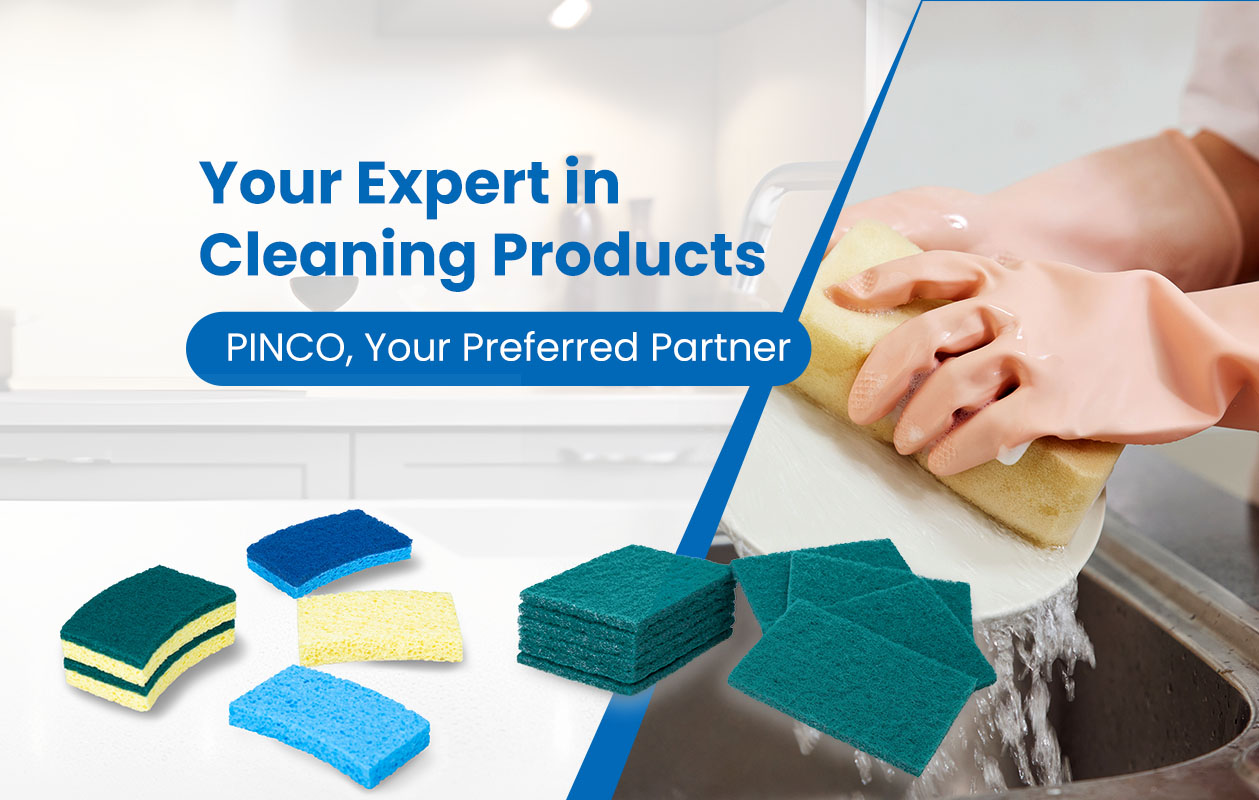
For large facilities such as factories, commercial kitchens, hospitals, hotels, and warehouses, cleaning costs are not driven by the price of a single tool—but by labor time, replacement frequency, downtime, hygiene failures, and surface damage. Durable Scouring Pads play a surprisingly important role in cost control because they directly affect all of these factors.
Below is a structured explanation of how large facilities can reduce total cleaning costs by choosing and managing durable scouring pads correctly.
Low-cost, consumer-grade scouring pads:
Wear out quickly
Lose abrasiveness after limited use
Tear or flatten under pressure
This leads to:
Frequent replacement
Higher procurement volume
More time spent changing tools
Durable scouring pads last longer and maintain performance, lowering the true cost per cleaning cycle, even if the unit price is higher.
Durable scouring pads are engineered with:
Consistent abrasive distribution
Stable fiber structure
Better detergent retention
As a result:
Stubborn residue is removed faster
Less scrubbing effort is required
Cleaning tasks finish sooner
In large facilities where labor is the biggest expense, saving even a few minutes per task adds up to significant annual savings.
In factories and food service environments, cleaning often happens:
Between shifts
Between production batches
During short maintenance windows
Durable scouring pads help by:
Completing deep cleaning within limited time slots
Reducing the need for re-cleaning missed residue
Allowing equipment to return to service faster
Reduced downtime directly improves operational efficiency.
High-durability pads:
Maintain shape and abrasiveness longer
Do not shed or tear easily
Withstand heat and chemicals
This allows facilities to:
Reduce monthly pad consumption
Simplify inventory management
Plan replacement cycles instead of reacting to failures
Predictable usage improves budget control.
Overly aggressive or low-quality pads can:
Scratch stainless steel
Increase surface roughness
Promote corrosion or bacterial buildup
This leads to:
Higher maintenance costs
Shorter equipment lifespan
Hygiene compliance risks
Durable pads with controlled abrasiveness clean effectively without damaging surfaces, protecting long-term asset value.
Durable scouring pads:
Clean more uniformly
Rinse more easily
Dry faster
This supports:
Reliable sanitation outcomes
Fewer failed hygiene checks
Lower risk of re-cleaning or product loss
Avoiding hygiene incidents saves far more than the cost of cleaning tools.
Large facilities rely on standard operating procedures.
Durable pads:
Perform consistently across shifts
Allow clear definition of “one pad = one task”
Reduce variability between workers
This reduces training time, supervision effort, and cleaning errors.
Cost reduction improves when facilities:
Use light-duty durable pads for daily cleaning
Reserve medium or heavy-duty pads for deep cleaning
Avoid overusing aggressive pads
Matching pad grade to task:
Extends pad life
Protects surfaces
Improves efficiency
Using one cheap pad for everything usually increases total cost.
Durable pads work best when paired with:
Color coding by zone
Defined replacement schedules
Proper rinsing and drying
This reduces:
Cross-contamination risk
Waste from premature disposal
Emergency replacements
Good management amplifies the value of durable products.
A facility that:
Replaces cheap pads daily
Uses hundreds of pads per month
may reduce:
Pad consumption by 30–50%
Cleaning time per task by 10–20%
by switching to durable, industrial-grade scouring pads. Over a year, this often translates into significant labor and material savings.
To reduce cleaning costs using durable scouring pads:
Evaluate pads based on lifespan and performance, not unit price
Match abrasiveness to cleaning tasks
Standardize pad use within SOPs
Track consumption before and after changes
Train staff on correct pad selection and care
These steps turn cleaning tools into cost-control assets.
In large facilities, cleaning costs are driven by time, consistency, and asset protection, not just consumables. Durable scouring pads reduce costs by lasting longer, cleaning faster, protecting surfaces, and supporting hygiene compliance. When chosen and managed correctly, they help facilities clean less often, faster, and with fewer problems.
For large-scale operations, durable scouring pads are not an expense to minimize—they are a leverage point for operational efficiency and long-term cost reduction.