
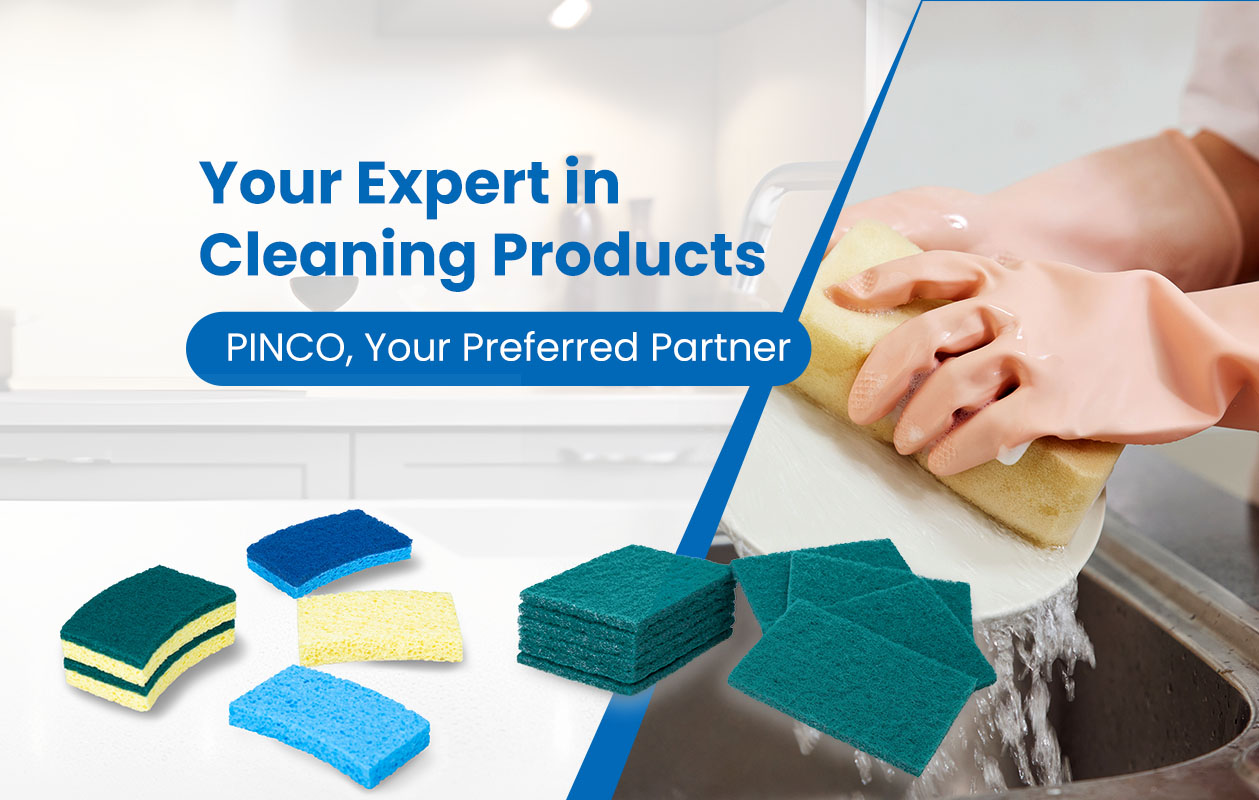
Commercial Scouring Pads and household scouring pads may look similar at first glance, but they are designed for very different use cases. The differences go beyond size or packaging and extend into materials, performance consistency, durability, hygiene control, and cost structure. Understanding these differences helps buyers, facility managers, and professional users choose the right product for their environment.
Below is a clear, side-by-side explanation of how commercial scouring pads differ from household versions.
1. Intended Use And Cleaning Intensity
Household scouring pads
Designed for:
Light to moderate cleaning
Occasional daily use
Domestic kitchens and bathrooms
They prioritize convenience and low cost over long-term durability.
Commercial Scouring Pads
Designed for:
High-frequency, repetitive cleaning
Heavy soil and grease removal
Restaurants, hotels, factories, and food plants
They must perform reliably under continuous workload.
2. Abrasiveness Control And Consistency
Household Versions
Abrasiveness is often generalized
Greater variation between batches
Designed to “work well enough” for mixed home surfaces
Commercial Versions
Abrasiveness is engineered and graded
Consistent fiber density and abrasive distribution
Predictable performance across units and batches
This consistency is essential for SOPs, training, and quality control.
3. Material Quality And Structure
Household Pads
Thinner construction
Softer bonding between fibers
Faster flattening and wear
Suitable for short-term use but not for heavy-duty cycles.
Commercial Pads
Thicker, denser fiber structure
Stronger bonding and tear resistance
Designed to maintain shape and effectiveness longer
This results in lower replacement frequency in professional settings.
4. Heat And Chemical Resistance
Household Pads
Limited tolerance to strong detergents
Faster degradation in hot water
Not designed for prolonged chemical exposure
Commercial Pads
Resistant to:
Hot water and steam
Alkaline degreasers
Acidic cleaners
They retain structure and performance in harsh cleaning environments.
5. Hygiene And Contamination Control
Household Pads
Typically single color
No built-in hygiene segregation logic
Replaced based on visible wear only
Commercial Pads
Often color-coded for zone separation
Support cross-contamination control
Easier to inspect, rinse, and dry
This is critical in food service and regulated environments.
6. Size, Shape, And Standardization
Household Pads
Optimized for hand comfort
Limited size options
Inconsistent dimensions between brands
Commercial Pads
Standardized sizes and thickness
Available in custom dimensions
Compatible with holders or cleaning tools
Standardization supports efficiency and training across teams.
7. Durability And Service Life
Household Pads
Short lifespan
Rapid loss of abrasiveness
Higher replacement frequency
Commercial Pads
Designed for long service life
Maintain cleaning power over repeated use
Lower cost per use, despite higher unit price
Commercial buyers focus on total cost of ownership, not unit cost.
8. Surface Compatibility Range
Household Pads
Intended for general-purpose cleaning
Higher risk of misuse on sensitive surfaces
Commercial Pads
Available in multiple grades:
Non-scratch
Medium-duty
Heavy-duty
This allows precise matching to surface type and cleaning task.
9. Performance Expectations
Household Users Expect
Acceptable cleaning
Convenience
Low upfront cost
Commercial Users Expect
Repeatable results
Predictable wear behavior
Compliance with hygiene and safety standards
Failure to meet these expectations leads to operational risk.
10. Cost Logic: Price vs Value
| Aspect | Household Pad | Commercial Pad |
|---|---|---|
| Unit price | Low | Higher |
| Lifespan | Short | Long |
| Consistency | Variable | Stable |
| Replacement rate | Frequent | Planned |
| Cost per use | Higher | Lower |
Commercial pads are an operational tool, not a disposable convenience item.
Common Misconception
A frequent mistake is using household scouring pads in commercial kitchens or facilities to save cost. In practice, this often results in:
Faster wear and higher consumption
Inconsistent cleaning results
Hygiene risks
Higher long-term cost
Final Perspective
Commercial scouring pads differ from household versions in engineering depth, durability, hygiene support, and performance predictability. They are designed to function as part of a professional cleaning system, not as a casual accessory.
For environments where cleaning efficiency, surface safety, and hygiene compliance matter, commercial scouring pads are not an upgrade—they are a necessity.