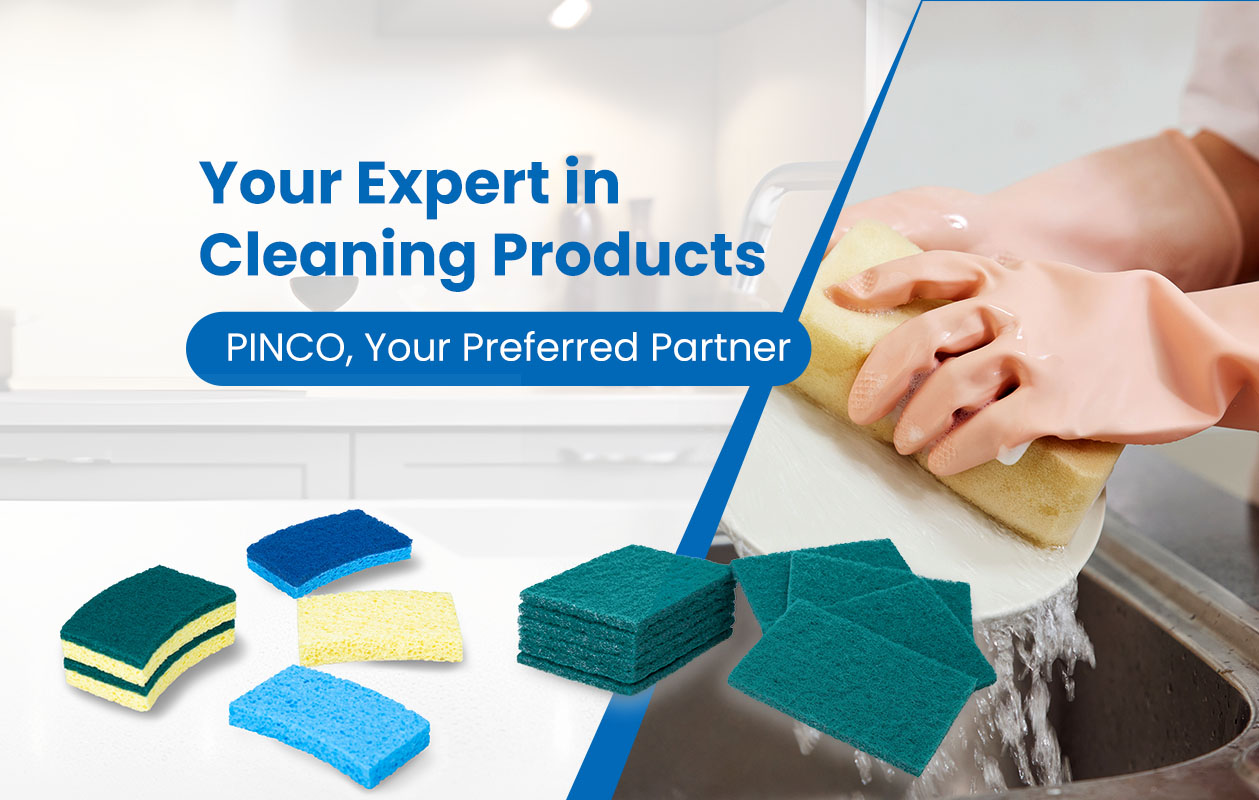
In food processing environments, Scouring Pads are not selected purely for cleaning power. They must meet strict hygiene, material safety, surface protection, and contamination-control requirements. Using the wrong type of scouring pad can damage equipment, introduce foreign material risks, or compromise sanitation compliance.
Below is a clear, practical guide to the types of scouring pads that are suitable for food processing equipment, and why they are used.
Before discussing types, it is important to understand what food processing applications require:
Non-toxic, food-safe materials
No metal shedding or fragment risk
Controlled abrasiveness to protect stainless steel surfaces
Easy rinsing and drying to reduce microbial growth
Compatibility with cleaning chemicals and hot water
Support for sanitation and audit requirements
Pads used in food plants are sanitation tools, not general-purpose scrubbers.
Non-metallic scouring pads made from synthetic fibers with bonded abrasives are the most widely used option.
They are suitable for:
Stainless steel tanks, tables, and conveyors
Food contact and non-contact surfaces
Routine cleaning and scheduled sanitation
Why they work well
No rust risk
No metal particle contamination
Controlled abrasion that cleans without damaging surfaces
These pads are available in multiple grades, allowing cleaning strength to be matched to soil level.
Light-abrasive or non-scratch pads are used where surface finish integrity is critical.
Common applications:
Polished stainless steel
Equipment with sanitary finishes
Areas cleaned frequently throughout production shifts
Advantages
Minimal scratch risk
Suitable for daily cleaning
Helps maintain hygienic surface smoothness
These pads are ideal for high-frequency cleaning zones.
Medium-abrasive pads are used during:
End-of-shift deep cleaning
Removal of cooked-on residues
Cleaning of heat-exposed equipment
They provide stronger cleaning power while remaining safe for stainless steel when used correctly.
Dual-layer pads combine:
An abrasive non-metallic layer
An absorbent sponge layer
They are useful for:
Manual cleaning of removable components
Smaller equipment parts
Cleaning where wiping and scrubbing are both required
The sponge layer improves detergent retention and rinsing efficiency.
Color-coded non-metallic scouring pads are widely used in food plants to separate cleaning tasks by zone.
Typical color use:
Blue: food contact surfaces
Red: raw material areas
Green: non-food contact equipment
Yellow: floor or drain cleaning
Color coding supports sanitation programs and simplifies staff training and audits.
While CIP systems handle internal surfaces, scouring pads are still required for:
External surfaces
Gaskets and seals
Weld seams and joints
Areas inaccessible to CIP
Pads selected for these tasks must tolerate:
Hot water
Alkaline and acidic detergents
Frequent use
These should not be used on food processing equipment.
Risks include:
Metal fragment contamination
Rust formation
Damage to stainless steel surfaces
Failure to meet food safety standards
They are unsuitable for any food contact or food-adjacent area.
Very coarse pads can:
Scratch stainless steel
Create surface roughness that traps bacteria
Shorten equipment lifespan
Surface damage directly increases hygiene risk.
| Cleaning Task | Recommended Pad Type |
|---|---|
| Daily sanitation | Light non-scratch non-metallic pad |
| End-of-shift deep cleaning | Medium non-metallic pad |
| Polished stainless steel | Fine non-scratch pad |
| Removable parts | Dual-layer sponge scouring pad |
| Zoned hygiene programs | Color-coded non-metallic pads |
Correct matching prevents over-cleaning and under-cleaning.
Even the correct pad must be:
Rinsed thoroughly after use
Allowed to dry completely
Replaced regularly
Worn or contaminated pads can harbor bacteria and should not be reused beyond their hygienic lifespan.
When selecting scouring pads for food processing equipment:
Specify non-metallic, food-safe materials
Choose abrasiveness based on soil level, not habit
Implement color coding for hygiene control
Train staff on correct pad selection per task
Replace pads on a defined schedule
Pads are part of the sanitation system, not just cleaning accessories.
Scouring pads suitable for food processing equipment must prioritize food safety, surface protection, and hygiene compliance over aggressive cleaning power. Non-metallic, controlled-abrasion pads—especially when color-coded and correctly graded—offer the best balance of effectiveness and safety.
When selected and managed properly, scouring pads support not only cleanliness, but also equipment longevity, audit readiness, and overall food safety performance in modern processing facilities.