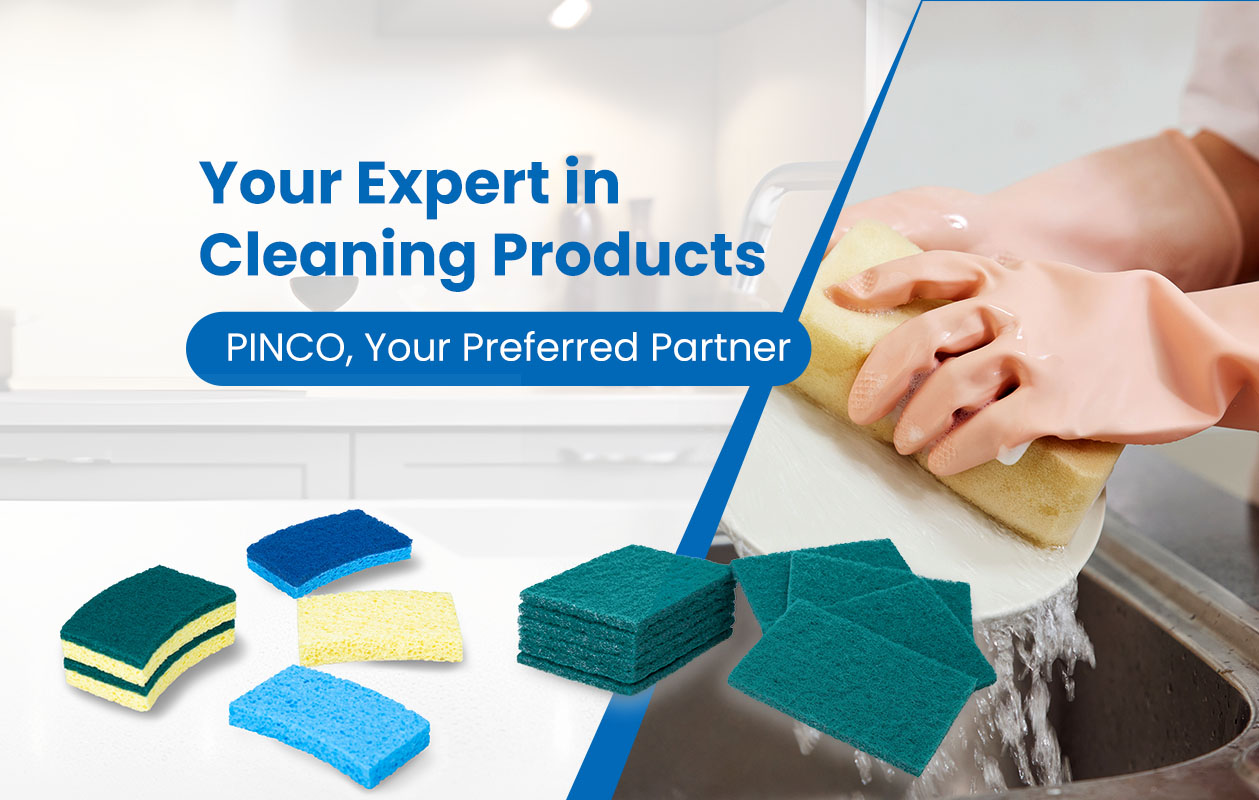
The lifespan of a Scouring Pad is not determined only by how often it is used. Heat exposure and detergent chemistry play a decisive role in how quickly a scouring pad loses its cleaning power, structural integrity, and hygiene performance. In household kitchens, restaurants, and professional cleaning environments, misunderstanding these factors often leads to premature pad failure and unnecessary replacement costs.
This article explains how heat and detergents interact with scouring pad materials and what practical steps can extend their usable life.
Most scouring pads are made from synthetic polymer fibers, Sponge foam, or bonded abrasive layers. When exposed to high heat, these materials gradually lose strength.
Common heat-related effects include:
Softening or deformation of abrasive fibers
Loss of bonding between layers in dual-layer pads
Reduced elasticity in sponge layers
Repeated exposure to hot cookware or boiling water accelerates structural fatigue.
Using a scouring pad directly on:
Recently heated pans
Hot stovetops
Warm oven racks
can cause localized melting or glazing of abrasive fibers. Even if damage is not immediately visible, the affected area becomes smoother and less effective at scrubbing.
Heat alone does not kill bacteria unless combined with proper sanitation. Warm, damp scouring pads stored without drying create ideal conditions for microbial growth, which shortens hygienic lifespan even if the pad still looks intact.
Many heavy-duty dishwashing and degreasing detergents are alkaline. Prolonged exposure can:
Break down sponge foam structure
Cause abrasive fibers to become brittle
Reduce bonding strength between layers
Over time, this leads to tearing, shedding, and loss of scrubbing efficiency.
Leaving scouring pads soaking in detergent solutions between uses:
Prolongs chemical exposure
Softens adhesives and fiber bonds
Increases odor and hygiene issues
Short, controlled contact during cleaning is far less damaging than long soaking periods.
Incomplete rinsing allows detergent residue to dry inside the pad. This residue:
Makes fibers stiff and abrasive in the wrong way
Reduces absorbency
Causes uneven wear during use
Pads that feel stiff or crusty often fail sooner, even if fibers are not visibly worn.
The most rapid scouring pad degradation occurs when heat and detergents act together.
Typical examples include:
Scrubbing hot pans with strong degreasers
Rinsing pads in very hot water after detergent exposure
Leaving pads wet in warm environments
This combination speeds up fiber fatigue, layer separation, and loss of cleaning performance.
A scouring pad nearing the end of its useful life often shows:
Flattened or glossy abrasive surface
Sponge layer tearing or collapsing
Reduced cleaning effectiveness despite pressure
Persistent odor even after rinsing
These are indicators that material degradation has occurred.
Allow cookware to cool slightly before scrubbing
Avoid contact with open flames or hot surfaces
Rinse pads with warm, not boiling, water
Apply detergent to the surface, not directly onto the pad when possible
Avoid long-term soaking in cleaning chemicals
Rinse thoroughly after each use
Squeeze out excess water after use
Store pads in well-ventilated areas
Avoid stacking wet pads together
Proper drying significantly slows material breakdown and hygiene issues.
In commercial kitchens and cleaning operations:
Higher temperatures
Stronger detergents
More frequent use
naturally shorten pad lifespan. For these environments, planned replacement cycles are often more cost-effective than pushing pads beyond their hygienic or functional limits.
Heat and detergents do not immediately destroy scouring pads, but repeated exposure steadily degrades their structure, performance, and hygiene safety. High heat weakens fibers and adhesives, while aggressive detergents accelerate chemical breakdown. Together, they are the primary reasons scouring pads lose effectiveness faster than expected.
The lifespan of a scouring pad is shaped as much by how it is used and cared for as by its material quality. By moderating heat exposure, managing detergent contact, rinsing thoroughly, and allowing proper drying, users can significantly extend pad life while maintaining safe and effective cleaning performance.