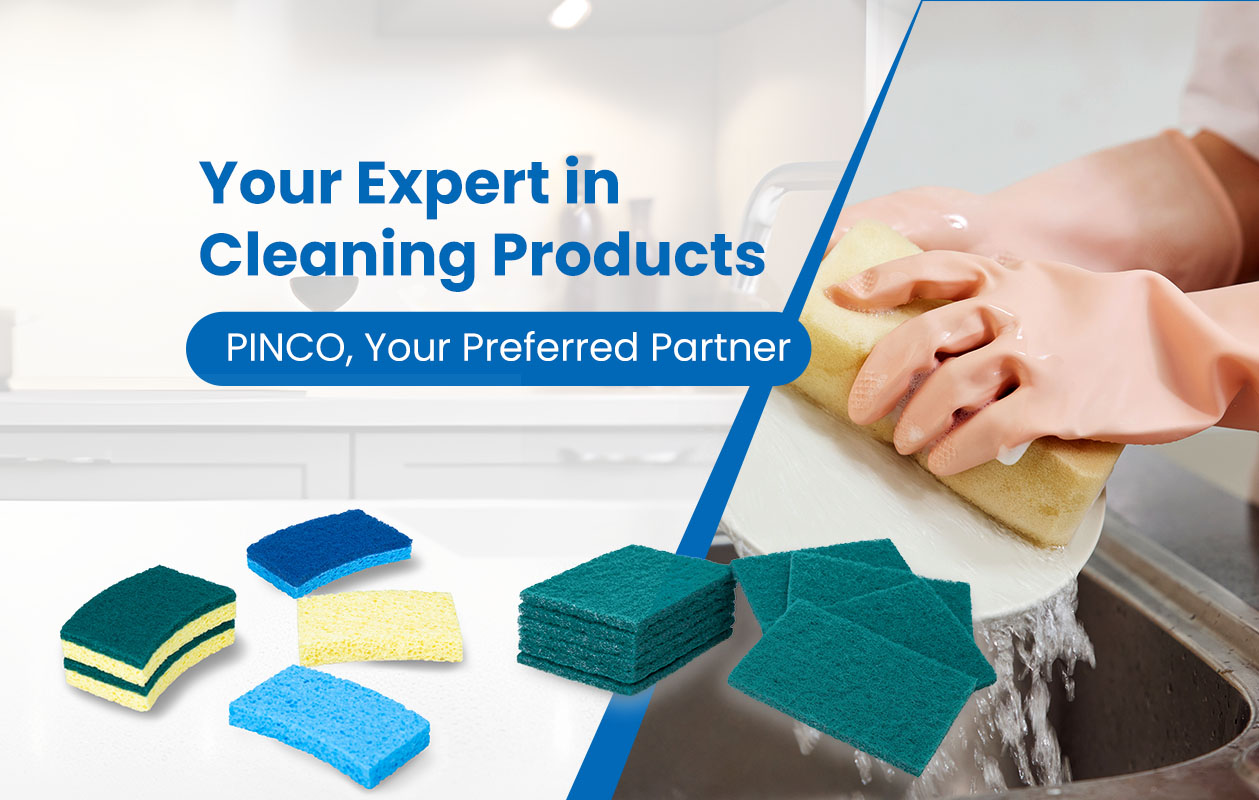
Using a Scouring Pad is simple, but using it efficiently ensures faster cleaning, better removal of residue, longer pad lifespan, and reduced risk of damaging surfaces.
Manufacturers like PINCO design pads with different densities, abrasiveness levels, and fiber types—so applying the correct technique maximizes performance while protecting cookware and surfaces.
Before using a scouring pad, soak the cookware or surface in warm water for several minutes. This helps:
Loosen dried or baked-on food
Reduce scrubbing pressure
Extend pad life by reducing friction
For greasy pans, adding dish soap to the soak improves results.
White (non-scratch): nonstick cookware, glass, delicate surfaces
Blue (medium-duty): stainless steel, sinks, everyday dishes
Green (heavy-duty): grills, oven racks, cast iron, stubborn residue
Choosing the correct pad prevents surface damage and improves scrubbing efficiency.
Circular scrubbing increases contact points and helps lift residue evenly.
This prevents visible scratch patterns and maintains the surface finish.
Abrasive grains are designed to cut through residue on their own. Pressing too hard:
Wears out the pad faster
Risks scratching surfaces
Increases user fatigue
Use moderate pressure and allow the pad’s structure to remove buildup.
Flip the pad regularly during cleaning. This:
Extends lifespan
Maintains scrubbing consistency
Prevents uneven fiber compression
PINCO pads are designed to perform equally well on both sides.
Adding detergent to the pad helps:
Reduce friction
Break down oils faster
Lift residue more efficiently
For heavy-duty jobs, using a degreaser boosts scrubbing power.
Divide the surface mentally into small sections and scrub each area thoroughly.
This method avoids missing spots and reduces unnecessary re-scrubbing.
Rinsing the pad removes:
Food particles
Soap buildup
Grease trapped in fibers
A clean pad scrubs more effectively and prevents streaking.
For tough, localized residue:
Use short, firm back-and-forth strokes
Focus pressure directly on the spot
Avoid prolonged scrubbing that could harm sensitive surfaces
This technique is effective with heavy-duty pads on durable materials.
For extremely stubborn grease or carbon:
Use hot water
Apply steam
Heat cookware slightly on the stove before soaking
This reduces the amount of manual scrubbing needed.
Always wet the pad before use. A dry pad—especially heavy-duty—can scratch even durable surfaces and degrade faster.
Use different pads for:
Cookware
Countertops
Sinks
Bathroom cleaning
This prevents cross-contamination and ensures optimal pad performance.
PINCO offers color-coded pads for easy task assignment.
A worn pad:
Cleans less efficiently
Requires more force
Increases risk of scratching
Traps bacteria
Replace pads regularly to maintain efficient cleaning.
Efficient use of a scouring pad requires proper surface preparation, choosing the right pad grade, using controlled scrubbing motions, rinsing frequently, and maintaining hygiene.
By applying these techniques, users achieve faster, safer, and more effective cleaning while extending pad lifespan.
PINCO scouring pads are designed to support these best practices through durable fibers, consistent abrasiveness, and ergonomic performance.