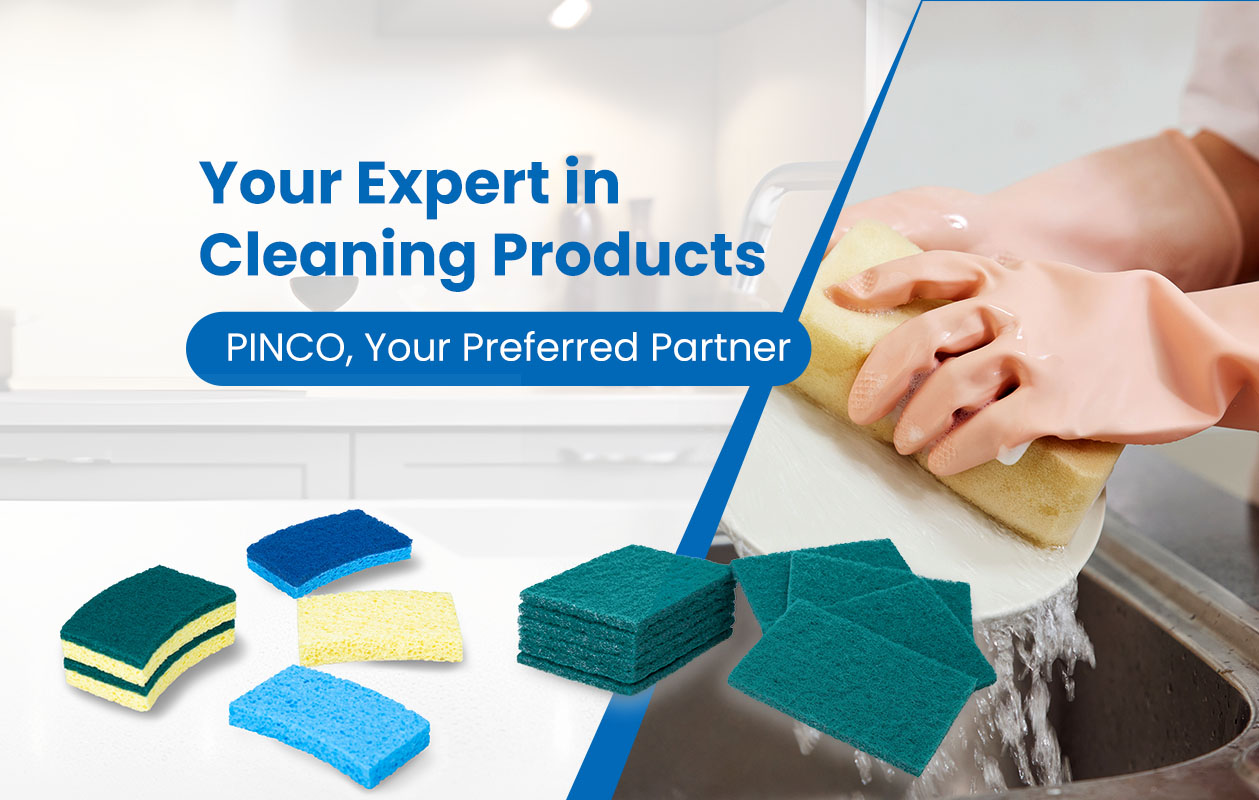
A Scouring Pad is exposed to grease, food particles, detergent, and bacteria every time it is used. Without proper cleaning and care, it can quickly become unhygienic, lose its scrubbing power, or wear out prematurely.
Manufacturers like PINCO design durable pads, but correct maintenance is essential for extending lifespan and ensuring safe, effective cleaning.
Immediately after using the pad, rinse it under warm running water. This helps:
Flush out trapped food particles
Remove grease and soap residue
Prevent buildup that reduces scrubbing efficiency
Press the pad gently while rinsing to release water and debris.
Hot water helps dissolve fats and reduce bacterial growth. This is especially important in:
Commercial kitchens
Food processing environments
Busy households
A quick rinse with hot water keeps the pad fresher between uses.
A wet scouring pad is a breeding ground for bacteria. After rinsing:
Squeeze out as much water as possible
Ensure the pad is not dripping wet
Avoid twisting too aggressively, which can damage fibers
PINCO pads are built to resist deformation, but gentle handling extends their life.
Place the pad in an open, well-ventilated area, such as:
A drying rack
A wire basket
The side of a sink, elevated
Avoid leaving the pad flat on a wet surface—it traps moisture and encourages bacteria.
When possible, drying in natural sunlight reduces odor and extends pad hygiene.
If the scouring pad was used on oily cookware or grills:
Soak it briefly in warm water with a small amount of degreaser
Rinse again under hot water
This restores the pad’s cutting power by removing embedded grease.
Place the pad in boiling water for 2–3 minutes to eliminate bacteria and odors.
Use a mild bleach mixture for quick disinfection:
1 part bleach
9 parts water
Soak for 1–2 minutes
Rinse thoroughly afterward.
An alternative for household cleaning is soaking in vinegar to help reduce odors.
All these methods are safe for PINCO’s nylon and polyester pads.
For safety and hygiene:
Use separate pads for cookware, sinks, and bathrooms
Color-coding helps maintain this separation
PINCO offers multiple pad colors to support hygienic cleaning systems.
Sealing a damp pad inside a container accelerates mold growth. Always ensure:
The pad is dry before storage
Storage areas allow airflow
Commercial settings should use open storage racks for pads.
Even with proper maintenance, scouring pads eventually wear out. Replace the pad if you notice:
Loss of abrasiveness
Fiber thinning
Foul odor that persists after cleaning
Visible damage or fraying
PINCO designs pads for durability, but replacing worn pads ensures safe and effective cleaning.
Proper care reduces:
Bacterial contamination
Fiber breakdown
Abrasive particle loss
Odor development
Deformation
This allows the pad to deliver consistent cleaning power while extending its usable lifespan.
Cleaning and maintaining a scouring pad properly involves rinsing after each use, disinfecting periodically, drying thoroughly, and storing it in a ventilated environment.
These steps ensure that the pad remains hygienic, effective, and long-lasting.
With durable materials and strong bonding technologies, PINCO scouring pads respond well to proper care and provide reliable performance in both household and industrial environments.