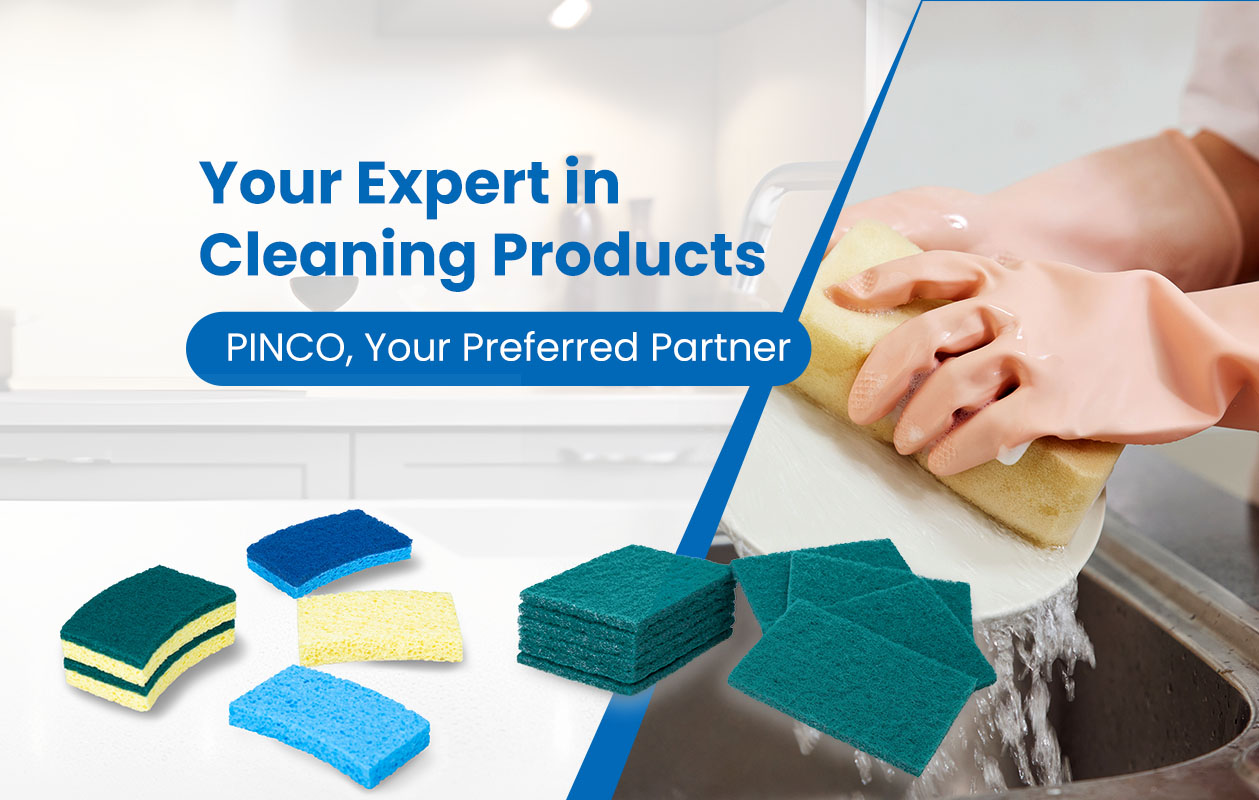
Using the wrong scouring pad can scratch cookware, damage finishes, flatten coatings, or fail to remove dirt effectively. Each surface requires a specific level of abrasiveness.
Manufacturers like PINCO design scouring pads in multiple grades—non-scratch, medium-duty, and heavy-duty—to help users match the correct pad to the cleaning task. Understanding these differences prevents damage and improves cleaning efficiency.
Different materials react differently to friction. Choosing a pad begins with understanding what the surface can tolerate.
Non-stick cookware
Polished stainless steel
Glass and ceramic
Acrylic and plastic
Chrome finishes
These surfaces scratch easily and require a gentle cleaning tool.
Cast iron
Grills and oven racks
Metal baking trays
Industrial equipment
Concrete or rough flooring
These surfaces can tolerate stronger abrasion.
Non-stick pans
Ceramic and porcelain cookware
Kitchen countertops
Bathroom fixtures
Plastic containers
These pads use soft nylon fibers with little or no abrasive minerals, ensuring safe cleaning without scratching.
Stainless steel pots
Sinks and stovetops
Daily kitchen cleaning
Removing dried food
Bathroom tiles
Medium-grade abrasive minerals provide efficient scrubbing without aggressive surface removal.
PINCO’s medium-duty pads balance cleaning strength and safety for everyday use.
Burnt-on food
Grills and ovens
Pots with carbon buildup
Industrial kitchen equipment
Floors needing deeper cleaning
These pads contain coarse abrasive grains like silicon carbide, offering strong cutting action suited for hard residue.
Certain surfaces respond differently depending on detergents:
Non-scratch pads are ideal for routine dish cleaning.
Medium-duty pads work well on kitchen oils and fats.
Heavy-duty pads perform best due to chemical resistance and structural stability.
PINCO designs polyester-based pads for environments that use strong alkaline detergents.
Require flexible pads that glide easily
White or blue pads are ideal
Benefit from dense, abrasive pads
Green heavy-duty pads clean grooves more effectively
Nylon pads provide better conformity
Choose pads with softer fiber structures
| Soil Type | Best Pad Choice |
|---|---|
| Light grease | White or blue pad |
| Dried food | Blue pad |
| Burnt residue | Green pad |
| Rust or carbon | Heavy-duty industrial pad |
| Everyday dishwashing | Blue or white pad |
| Bathroom soap scum | Blue pad |
| Outdoor grill buildup | Green pad |
This matrix simplifies decision-making for both household and commercial users.
Choose pads that rinse clean easily and do not trap food particles. Medium-density pads are best for repeated daily use.
Opt for pads with:
Heat resistance
Chemical resistance
High-density structure
Durable resin bonding
PINCO manufactures industrial-grade options that maintain structure under constant friction.
Softer and ideal for gentle cleaning
Recommended for surfaces requiring scratch protection
More rigid and stronger
Suitable for tough scrubbing and long-term use
Selecting the correct fiber type enhances cleaning performance while preventing damage.
Color coding helps crews avoid mistakes:
White: Non-scratch
Blue: Medium-duty
Green: Heavy-duty
Black/Brown: Industrial stripping
PINCO applies standardized coloring to ensure accuracy across markets.
Choosing the right scouring pad depends on understanding the surface type, soil level, material sensitivity, and cleaning environment.
Non-scratch pads protect delicate surfaces, medium-duty pads handle everyday kitchen cleaning, and heavy-duty pads remove stubborn residue from durable materials.
By offering a full range of fiber types, density levels, and abrasive strengths, PINCO provides effective cleaning solutions for both household users and industrial clients.