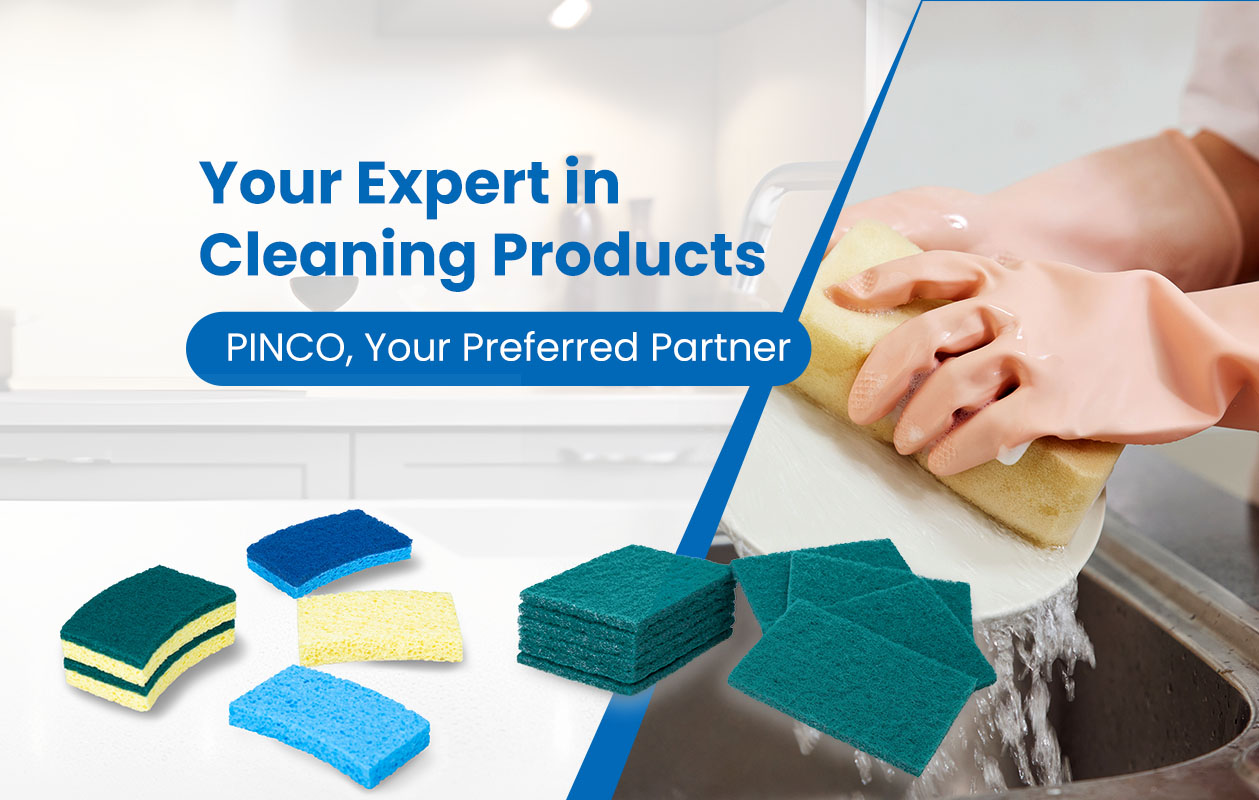
Sustainable design is becoming a global priority across consumer and commercial cleaning markets. While the formula of a cleaning product determines its effectiveness, packaging strongly influences its environmental footprint. Packaging affects resource consumption, transport efficiency, waste generation, and even how the product is used or disposed of.
As a manufacturer of cleaning tools and consumables, PINCO integrates sustainable packaging concepts into product development to support overseas buyers seeking responsible and environmentally aligned solutions.
Sustainable packaging begins with minimizing the amount of plastic, paper, or composite material used. Designing smaller, lightweight, and efficient packaging reduces waste and decreases the carbon footprint during transport.
Recyclable plastics, kraft paper, water-based inks, and bio-based materials help lower environmental impact. These options support circular economy principles and meet rising consumer expectations for environmentally friendly cleaning products.
Good packaging prevents moisture, contamination, and deformation. For cleaning pads, Sponges, and scrubbers—such as those produced by PINCO—packaging ensures the product arrives clean, dry, and in usable condition. Longer lifespan means fewer replacements, reducing overall waste.
Damaged packaging leads to product rejection. Strong but minimal packaging helps protect goods during transport without adding unnecessary material weight.
Compact packaging designs:
Reduce shipping volume
Lower container costs
Increase pallet load efficiency
For bulk buyers of sponges, scourers, and Floor Pads, optimized packaging significantly improves supply chain performance.
Lightweight materials reduce fuel consumption during transportation, contributing directly to sustainability goals.
Good packaging can reduce product misuse and waste. Clear instructions help users get the best results, increasing product lifetime and reducing unnecessary replacements.
Consumers increasingly expect guidance on how to recycle or responsibly dispose of packaging. Instructions such as “rinse before recycling” or “recyclable with paper waste” influence end-of-life environmental performance.
Cleaning products must remain hygienic from factory to home. Proper packaging protects absorbent sponges, scour pads, and cloths from dust, moisture, and microbes.
Barrier layers, sealed packs, and moisture-proof materials keep sensitive cleaning products in optimal condition, especially Cellulose or compressed sponges.
Refill pouches or bulk compressed packs reduce total packaging consumption.
Simple, low-ink, low-plastic packaging aligns with eco-focused market trends.
Some cleaning items can be paired with compostable wrappers or paper alternatives to reduce landfill burden.
PINCO uses optimized packing methods for sponges, pads, and scourers to reduce waste volume and improve container utilization.
PINCO incorporates sustainability through:
Efficient bulk packaging for sponges, floor pads, and scourers
Reduced plastic film usage where possible
Sturdy but minimal protective packaging to lower waste
High palletization efficiency for export shipments
Options for eco-friendly material selection depending on buyer needs
This approach helps overseas distributors meet both commercial and environmental standards.
Packaging influences the environmental footprint at every stage:
Production: Material choice and volume
Transport: Weight, size, and logistics efficiency
Use: Hygiene, durability, and consumer behavior
End of Life: Recyclability and waste generation
Sustainable packaging is not just a marketing trend—it is an operational and design principle that supports environmental commitments across the entire supply chain.